

Suburban Mother of Two Diagnosed with Metastatic Melanoma Urges Sun Protection and Vigilance
In the past 10 years, immunotherapy and targeted therapy have dramatically improved life expectancy for patients with advanced melanoma
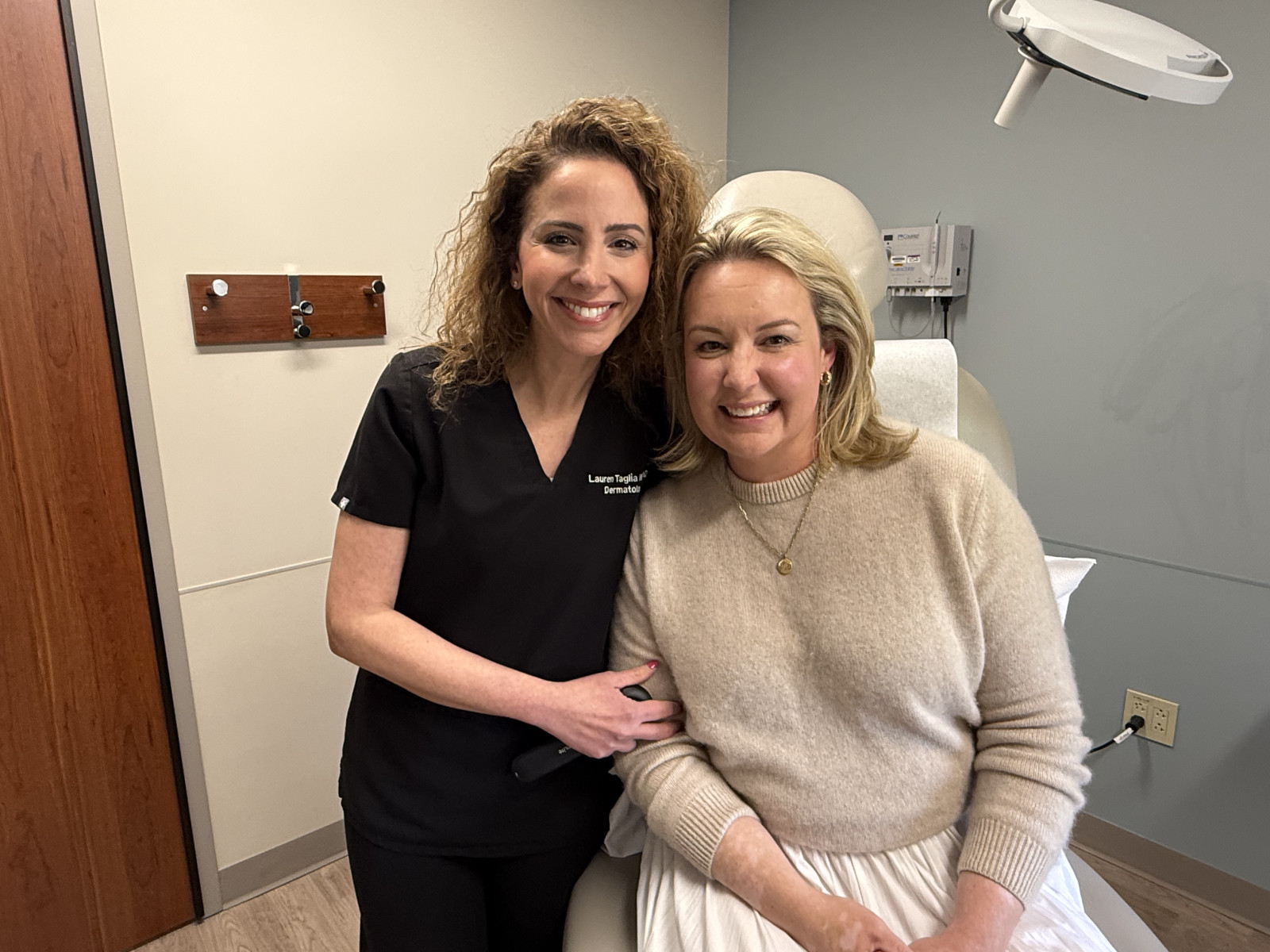
NAPERVILLE, Ill. – May 14, 2026 - She didn’t like the way it looked. That’s why Ashley Daly, a suburban mom of two, first made an appointment with Lauren Taglia, MD, PhD, a dermatologist, about removing a mole on her right calf.
Days later, the Wheaton mom and wife got a call from Dr. Taglia. The mole was malignant.
Daly was diagnosed with melanoma, the most serious type of skin cancer that can spread quickly if not detected and treated early.
The good news is the cancerous mole was caught early, surgically removed in 2020 and Daly was considered cancer-free.

What is this lump?
In 2023, Daly was watching television when she noticed a lump in her lower thigh on her right leg. This time she waited months to contact a doctor. The first doctor she saw at another institution dismissed her concerns, saying the lump was nothing.
In April 2024, at her annual exam, Daly showed the lump to her primary care physician, who ordered an MRI and eventually a biopsy, which confirmed a melanoma. The cancer was considered metastatic, having spread to another area on her right leg.
Dr. Taglia says patients with a significant history of melanoma need long-term follow up, given the increased risk of further skin cancer development. A new lump or bump in the skin of a patient with known melanoma is particularly concerning and needs evaluation.

Turning to Northwestern Medicine for Advanced Care
Daly met with Ashley Hardy, MD, a surgical oncologist at Northwestern Medicine Central DuPage Hospital, who first recommended treatment to shrink the tumor, which had grown over time from the size of a dime to the size of a ping pong ball.
John Ayers, MD, a medical oncologist at the Northwestern Medicine Warrenville Cancer Center, prescribed three rounds of immunotherapy, medications that encourage the patient’s own immune system to recognize and attack melanoma cells.
The treatment worked so well Dr. Hardy had to put a marker on Daly’s thigh to make sure she could find the tumor to remove it during surgery. In October 2024, Dr. Hardy surgically removed the tumor and the surrounding tissue and lymph nodes, which were tested for cancer and came back cancer-free.

Immunotherapy proves to be a game-changer
For the next year, Daly continued immunotherapy treatments every four weeks, following a protocol from research that found melanoma patients who completed a full year of immunotherapy treatments did better long-term than those who did not.
“In the past 10 years, immunotherapy and targeted therapy have dramatically improved life expectancy for patients with advanced melanoma,” Dr. Taglia said.
Daly’s immunotherapy treatments ended in July 2025. Now she undergoes regular scans to monitor for anything suspicious and she knows to act right away if something doesn’t look or feel right. Daly is encouraging others, especially those with a previous history of melanoma, to look for suspicious moles and other warning signs.
For a list of melanoma symptoms and treatment options, visit nm.org.


Contact

|
Lauren Petty Manager, Media Relations Northwestern Medicine Health Network Central DuPage Hospital, Lake Forest Hospital, Palos Hospital, Delnor Hospital, Kishwaukee Hospital, Valley West Hospital, Marianjoy Rehabilitation Hospital, McHenry Hospital, Huntley Hospital, Woodstock Hospital, Proton Center |