From Special Care to First Birthday: Twins reunite with Kishwaukee Hospital care team
Ahead of Rural Health Day, family’s story highlights the importance of specialized newborn care close to home
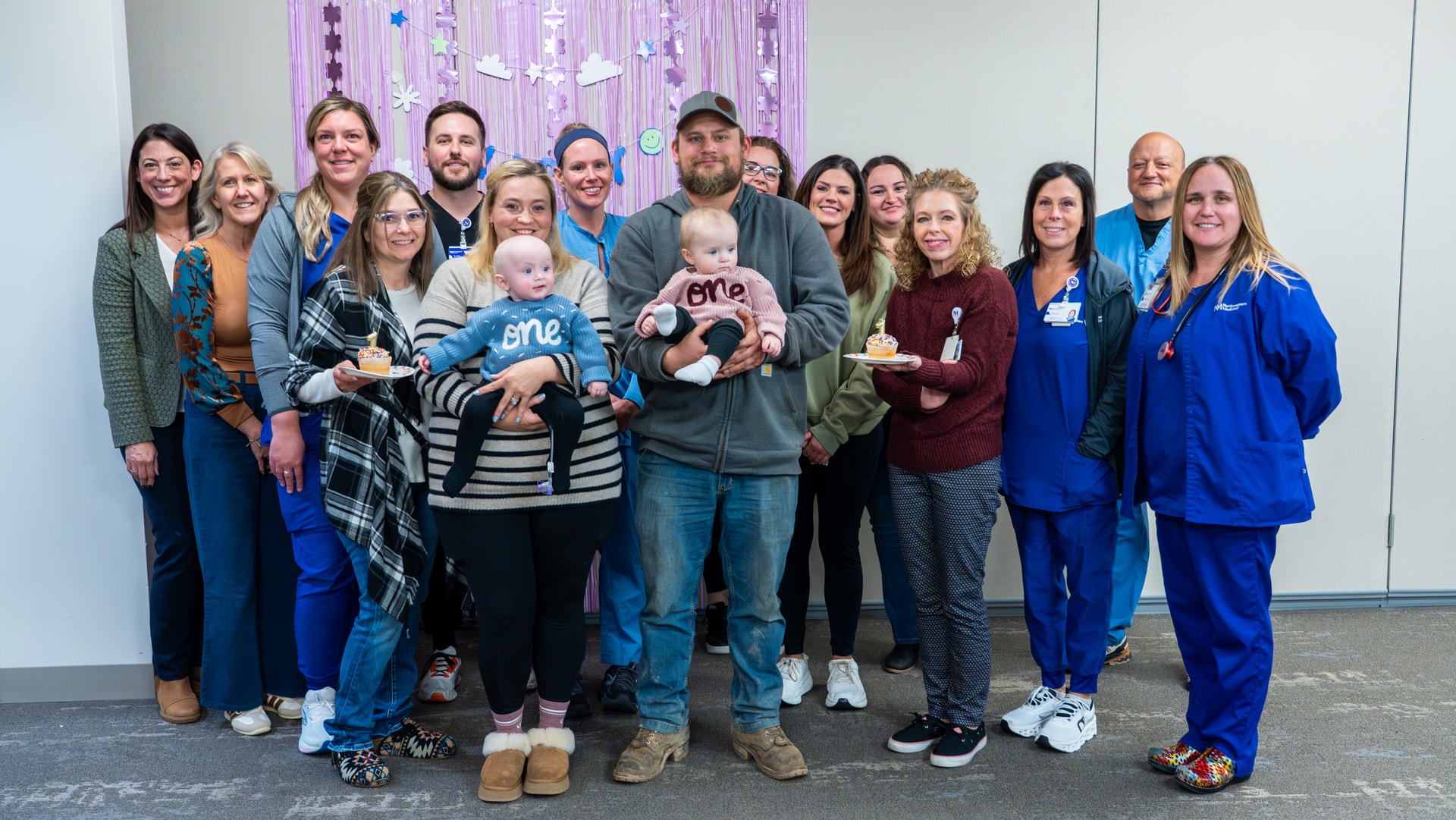
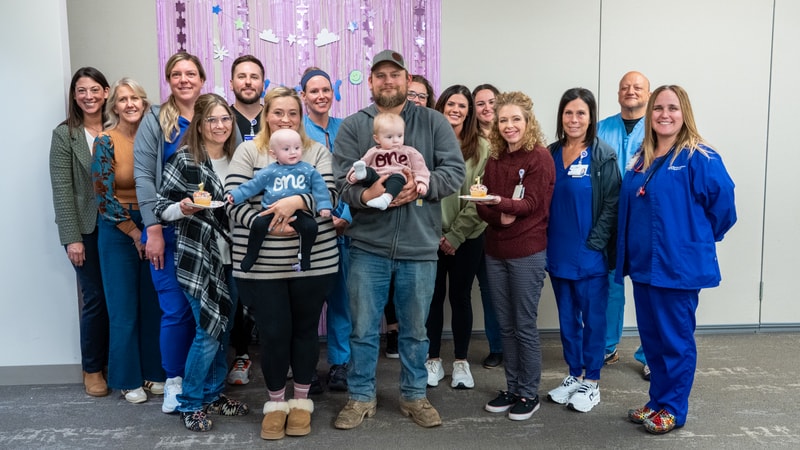
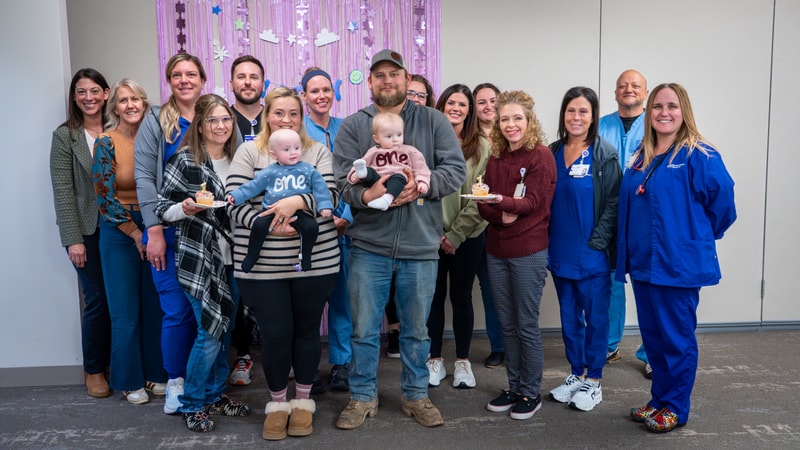
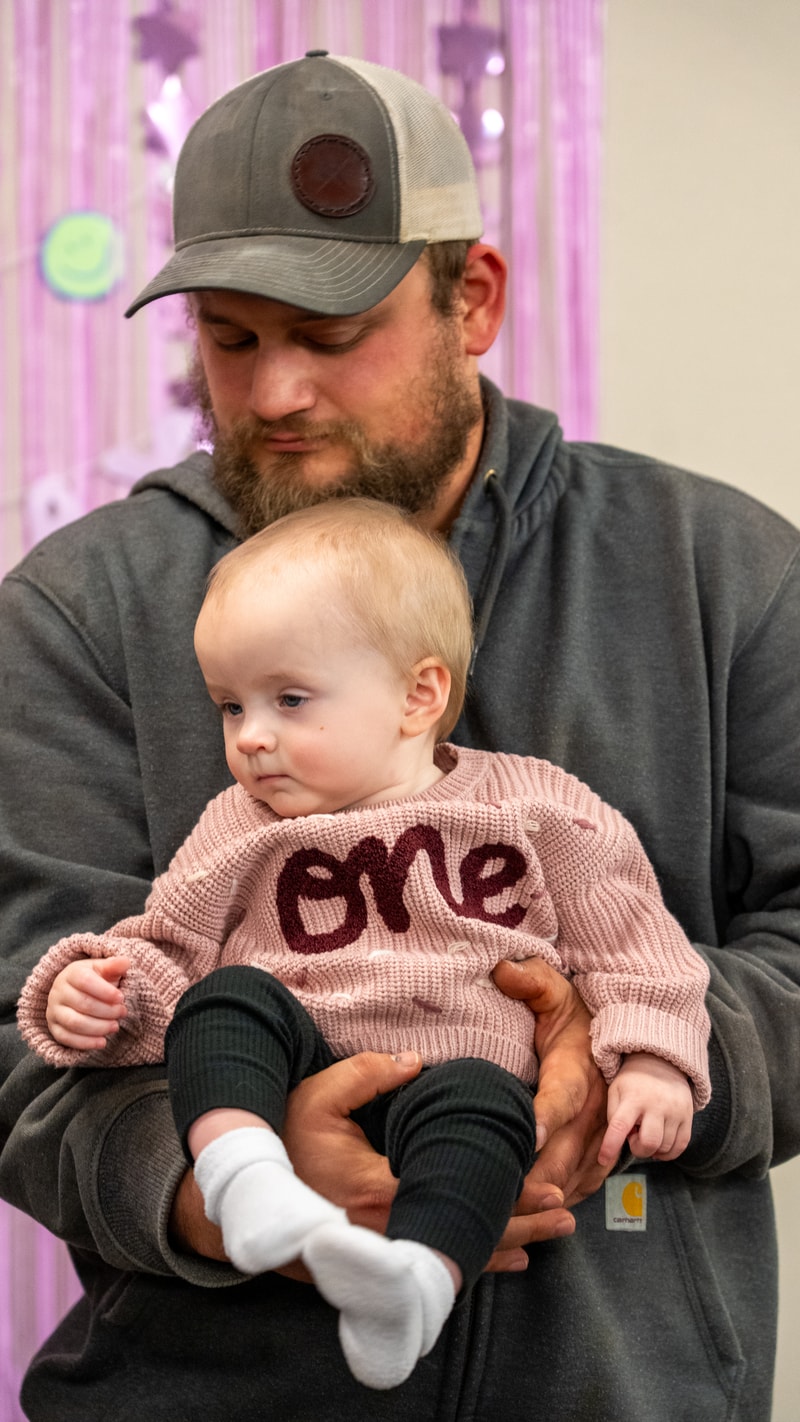
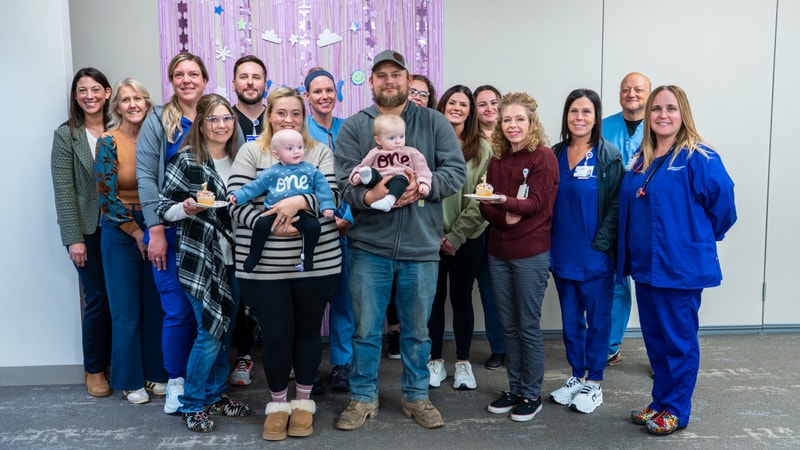
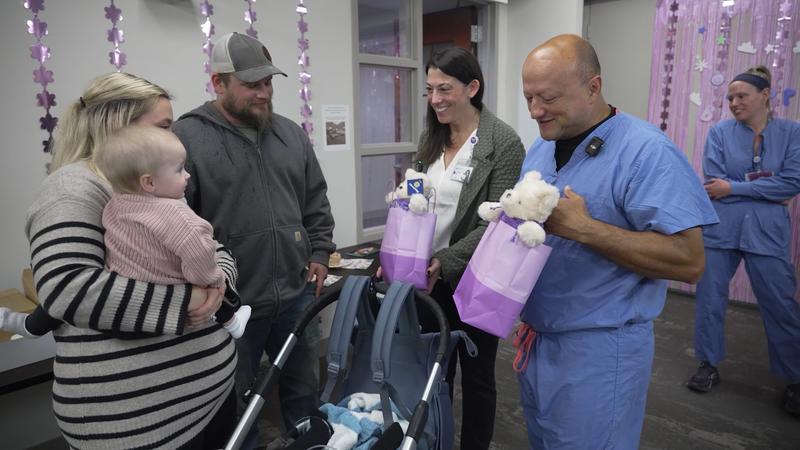
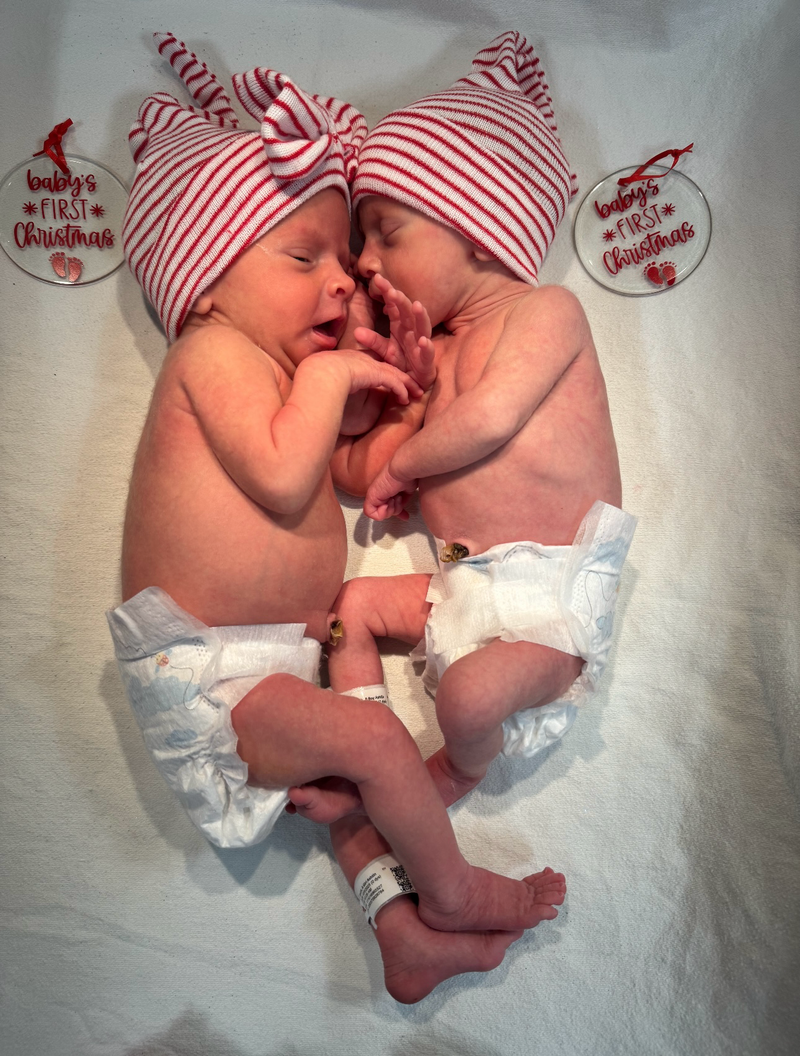
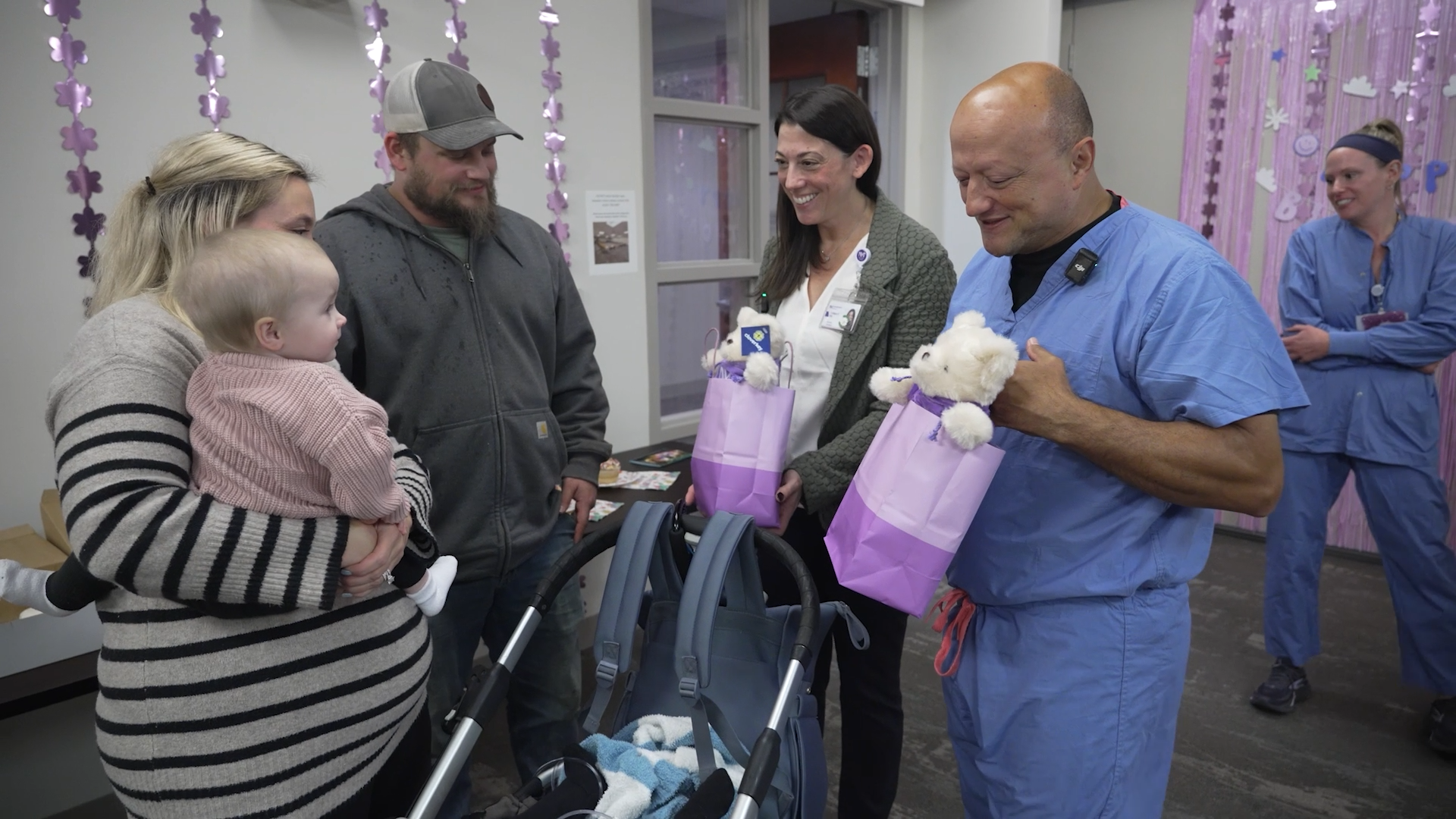
DEKALB, Ill.– Nearly one year after Ashtin Smith's twins, Knox and Drew, were born premature and in need respiratory support at Northwestern Medicine Kishwaukee Hospital, the family returned for a much happier reason: an early first birthday celebration with the team that cared for them.
The twins needed supportive care, including Bubble continuous positive airway pressure (bCPAP), but were able to remain at Kishwaukee Hospital, just five minutes from their home in Sycamore. For Smith, who also had two older children at home, keeping Knox and Drew close meant she did not have to balance caring for her family with a roughly 45-minute drive each way to a hospital offering a higher level of neonatal care.
“You don't stop being the other kids’ mom because your newborns are in the hospital. You're trying to be there for everybody,” Smith said. “Being so close to the special care nursery gave me both more time with my older kids and more time with the twins. I didn't have to choose who to be there for based on how long the drive is.”
A higher level of newborn care close to home
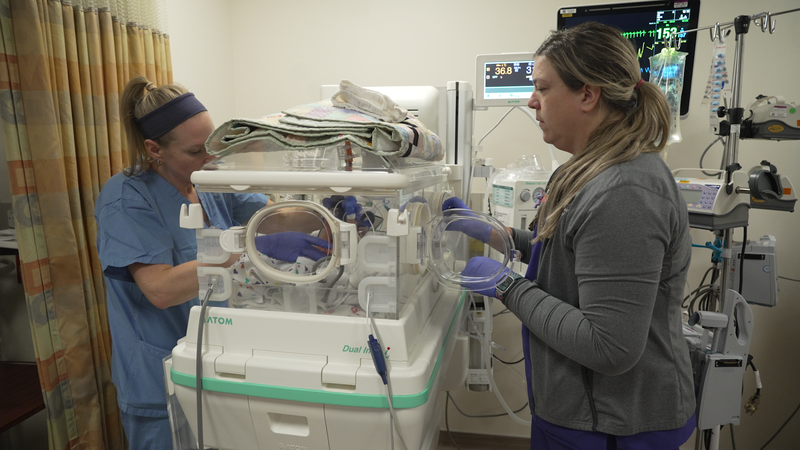
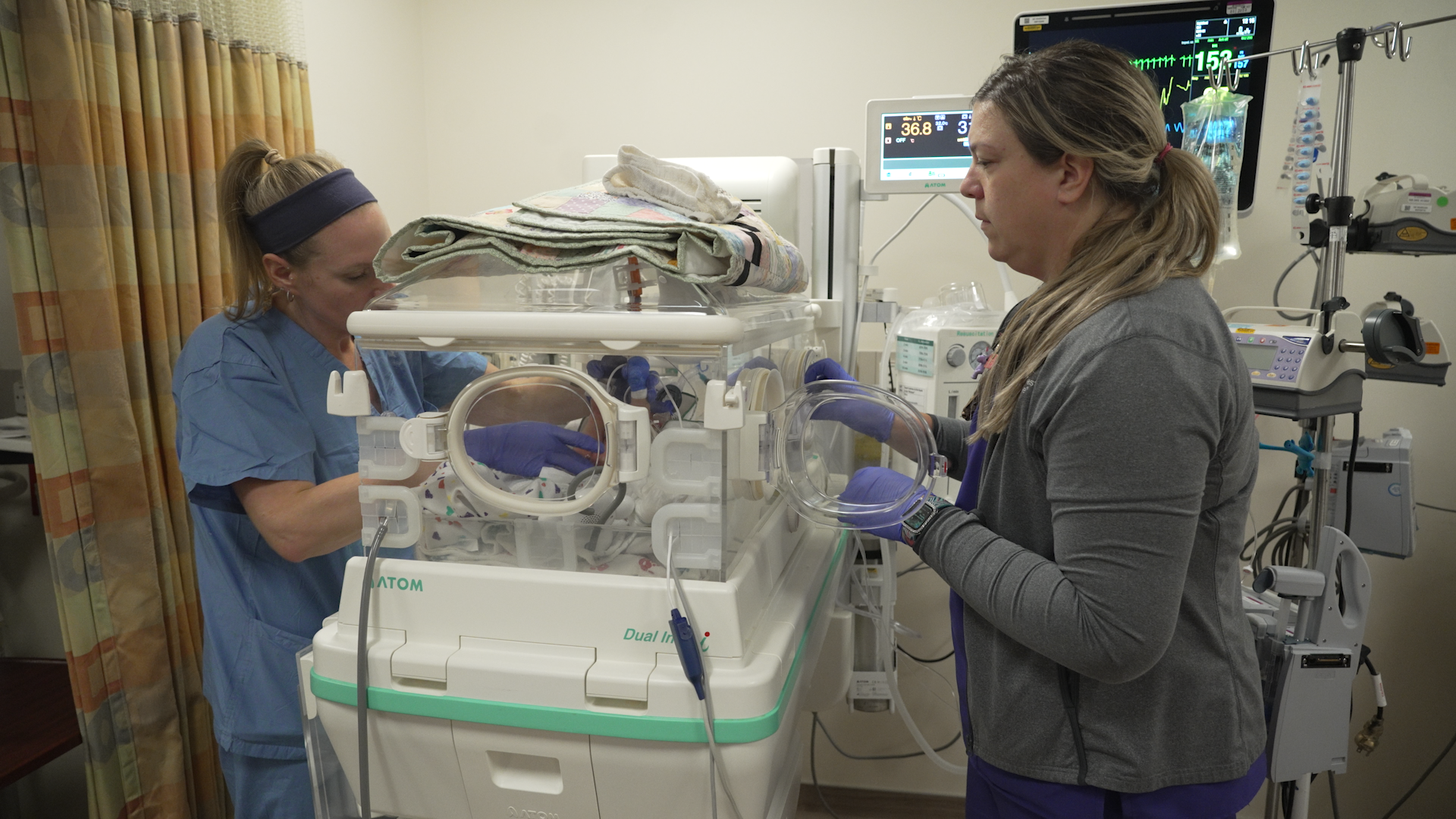
The Special Care Nursery (SCN) at Kishwaukee Hospital is designated as a Level II nursery with extended neonatal capabilities, equipped to provide a higher level of care for premature and medically complex newborns who need more support than a traditional newborn nursery can provide.
The specialized designation reflects the hospital's enhanced capabilities, allowing the nursery to care for some babies born as early as 30 weeks’ gestation, depending on the individual baby's condition and plan of care. The nursery can provide respiratory support for babies who previously may have needed to be transferred to another hospital. Kishwaukee Hospital also provides neonatology coverage 24 hours a day, seven days a week.
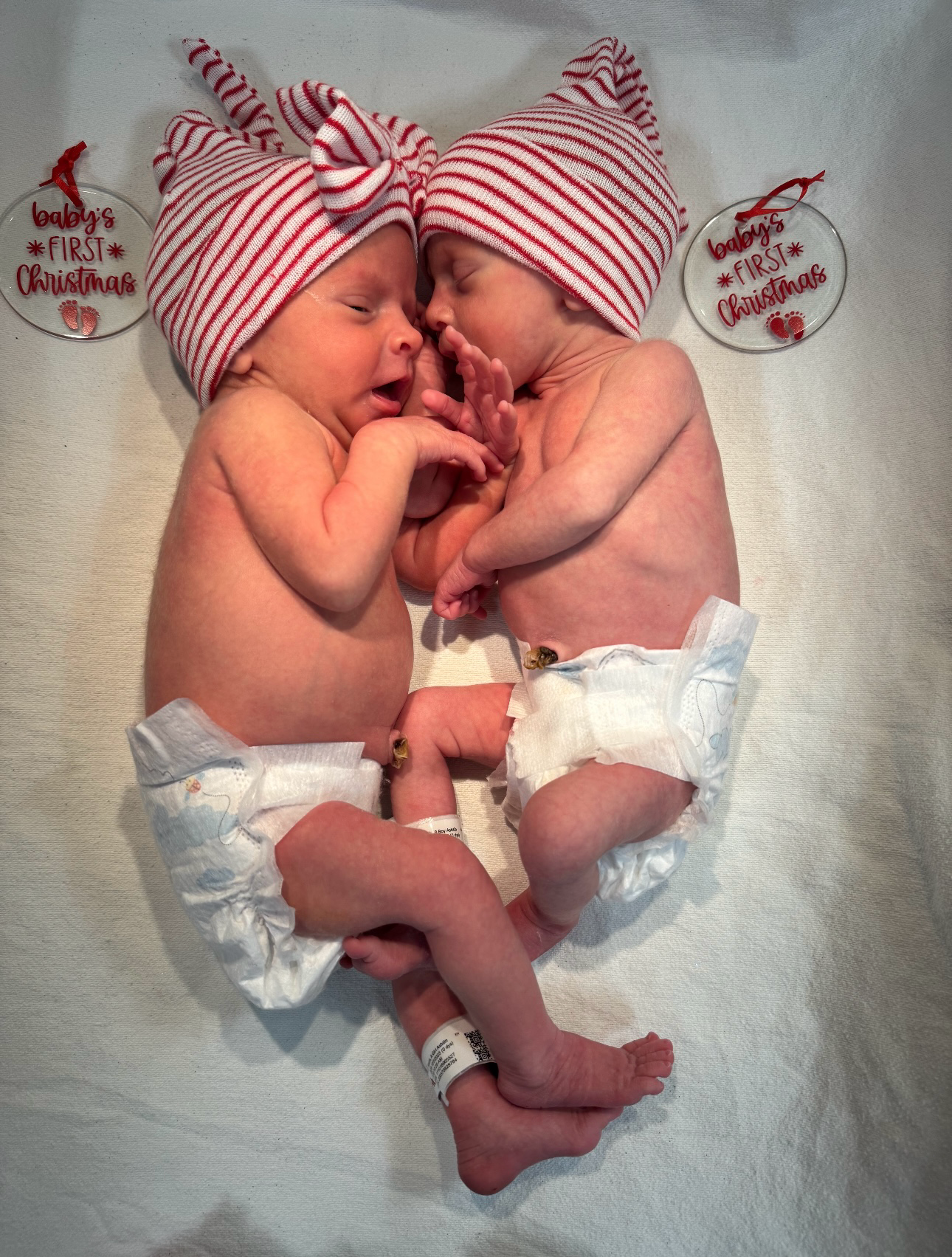
The SCN is designed to adapt as a newborn's needs change. Babies who need more support can receive care in enclosed, temperature-controlled incubators. As they grow stronger, they can move to open bassinets, giving parents more opportunities to hold, feed and care for their babies while preparing to go home.
For families expecting twins, the Special Care Nursery’s capabilities can be particularly important. Twins have an increased risk of being born prematurely, and one twin may require more respiratory or medical support than the other. The Special Care Nursery team tries to keep babies together at Kishwaukee Hospital when it is medically appropriate, helping avoid situations where parents have to divide their time between children.
“When you're caring for a family with twins, you're caring for more than two newborns. There are parents, siblings and an entire family trying to navigate an unexpected hospital stay,” said Scottie Paitl, MD, neonatology at Kishwaukee Hospital. “Being able to provide specialized newborn care closer to home can make that experience a little easier while still making sure each baby receives the level of care they need.”
Coordinating care when babies need more
When a newborn needs care a higher level of care, the Kishwaukee Hospital team coordinates care with neonatal specialists across Northwestern Medicine to ensure the appropriate level of care. Some babies may be transferred to the Neonatal Intensive Care Unit (NICU) at Northwestern Medicine Central DuPage Hospital for specialized treatment, surgery or more intensive care.
As a baby grows stronger, the goal is to bring that care closer to home whenever possible. In some cases, babies who are transferred for more intensive care can return to Kishwaukee Hospital once their medical needs can be safely managed by its Special Care Nursery. This allows families to spend more of their baby's hospital stay closer to home.
“Our priority is making sure each baby is in the best place for the care they need at that moment. Sometimes that means a baby needs to go to Central DuPage Hospital for a higher level of care,” said Frank Hernandez, MD, neonatology at Kishwaukee Hospital. “But when that baby progresses and we can safely care for them here, we work together to bring them back. For a family that lives five or 10 minutes from away from here, being able to come back closer to home can mean a lot.”
Returning for a much happier milestone
The twins will officially turn 1 on Dec. 5, but their care team came together early to celebrate with the family.
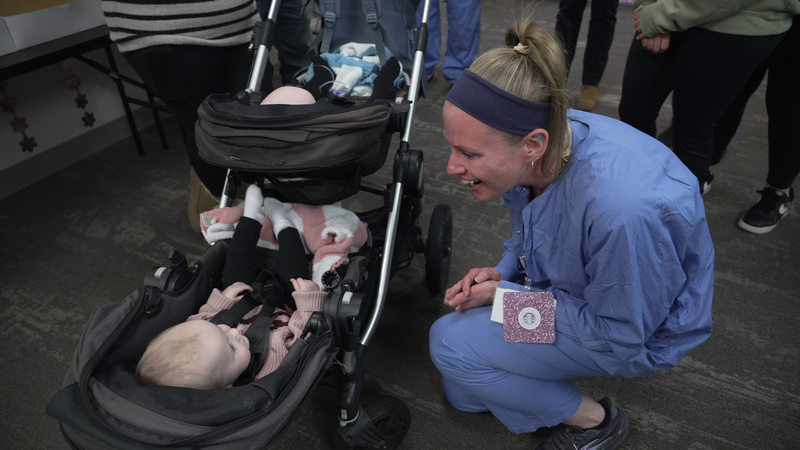
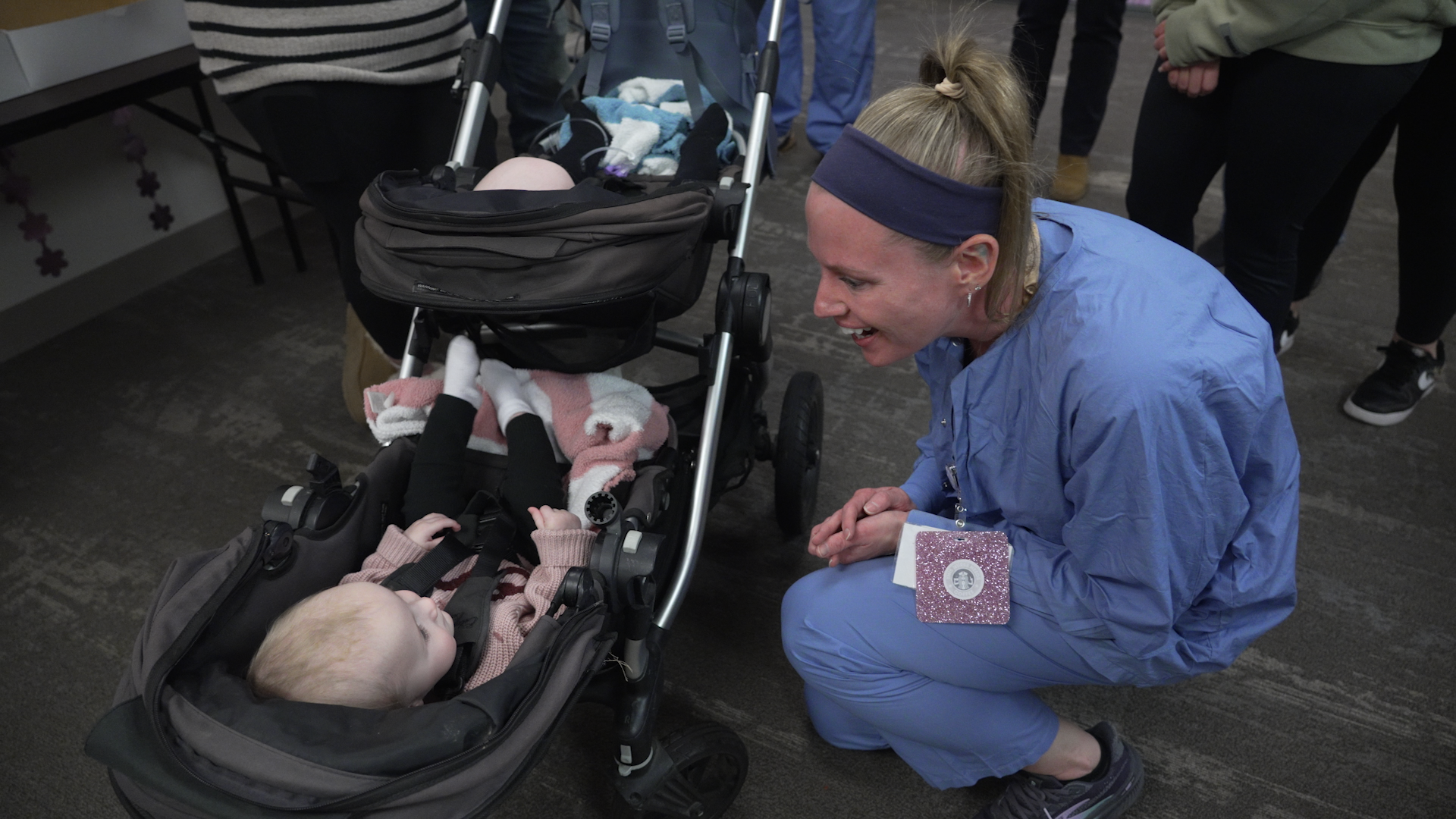
The reunion on Nov. 11 gave Smith, her husband and their twins an opportunity to reconnect with members of the SCN team to celebrate how far they have come since their first days.
“We get to know these babies and their families during such an important and sometimes uncertain time in their lives,” said Katherine Carnell, RN, BSN, a labor and delivery nurses who cared for the Smith twins. “Seeing them come back almost a year later and seeing how much they've grown is incredibly special. It's one of the best parts of what we do.”
For Smith, the reunion also brought the family's experience full circle.
"It's emotional to come back and see the people who cared for our babies when they were so little. They were part of the beginning of our story as a family, so being able to celebrate this milestone with them feels really special,” she said.
The early-birthday reunion happened ahead of National Rural Health Day on Nov. 19 and highlighted what access to specialized health care can mean for families in more rural communities, particularly when parents are balancing the needs of other children and responsibilities at home.
National Rural Health Day recognizes the contributions of health care providers serving rural communities and the challenges those communities face in accessing care. For families welcoming a premature or medically complex newborn, distance can take on a different meaning when each trip to the hospital has to be balanced with work, siblings, childcare and everyday responsibilities.
For Smith and her family, specialized newborn care at Kishawuakee Hospital, meant more time spent where it mattered most.
To learn more about Northwestern Medicine, visit https://news.nm.org/.
###
Contact

|
Aneta Crisp Specialist, Media Relations Northwestern Medicine Health Network Central DuPage Hospital, Lake Forest Hospital, Palos Hospital, Delnor Hospital, Kishwaukee Hospital, Valley West Hospital, Marianjoy Rehabilitation Hospital, McHenry Hospital, Huntley Hospital, Woodstock Hospital |