Northwestern Medicine performs second awake kidney transplant procedure
74-year-old Harry Stackhouse of Zion, Ill., received a kidney from his daughter, felt no pain during the procedure and was discharged home 36 hours later
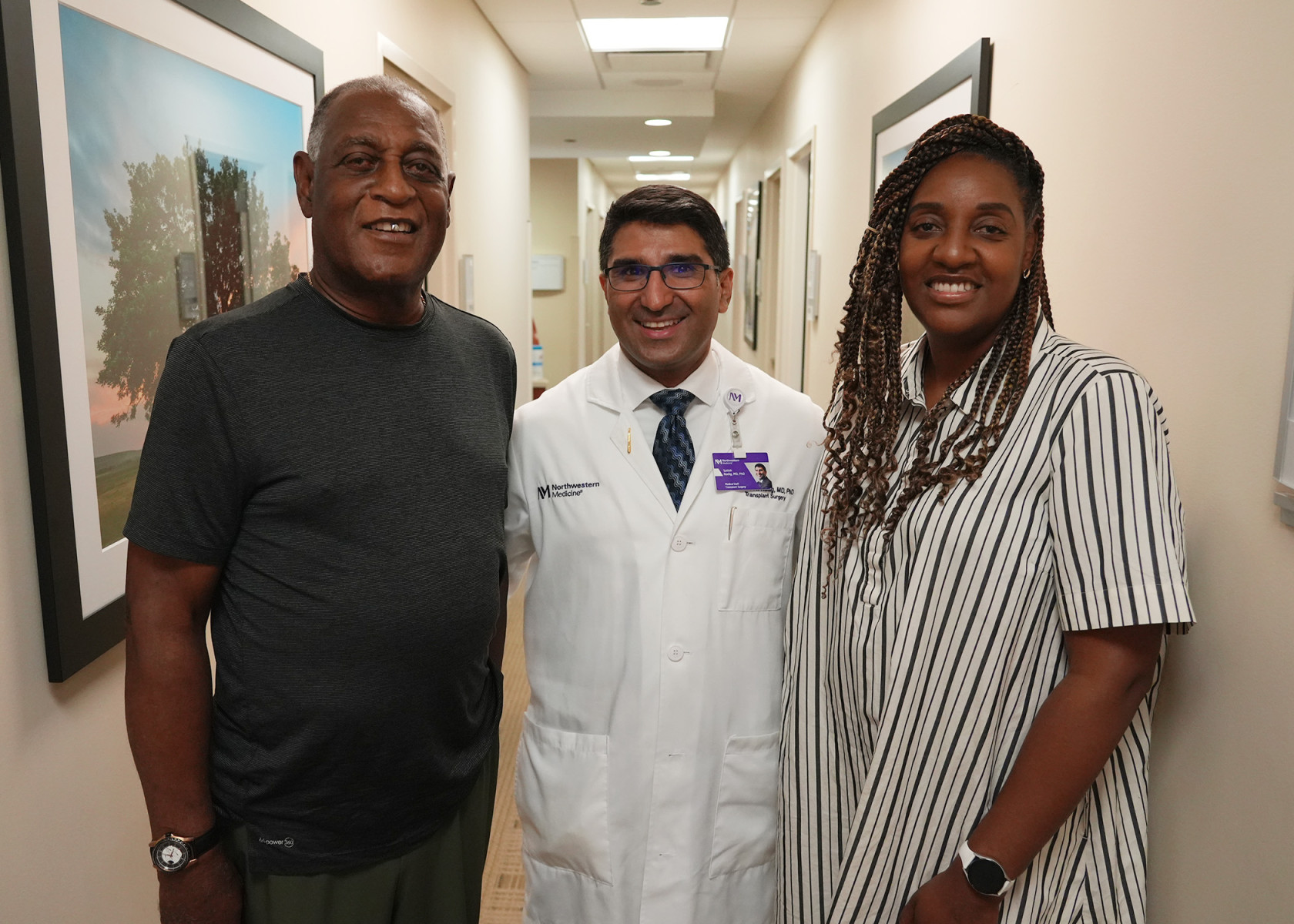
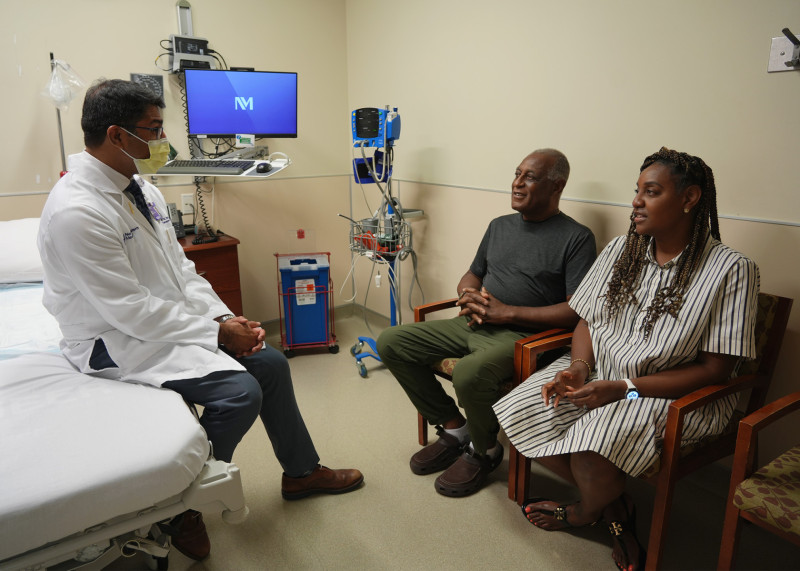
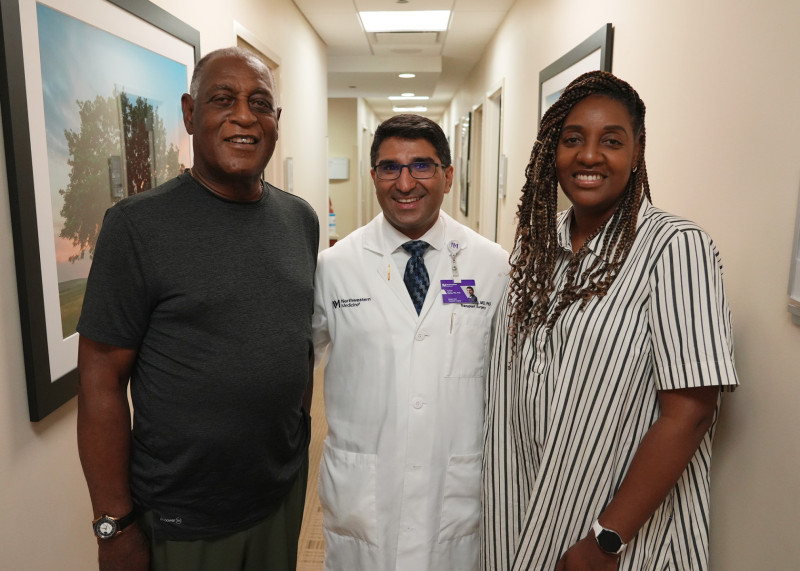
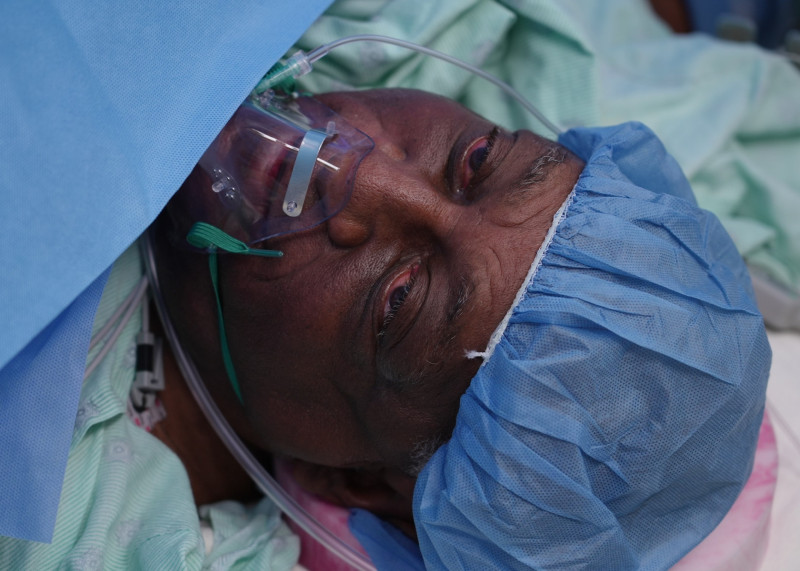
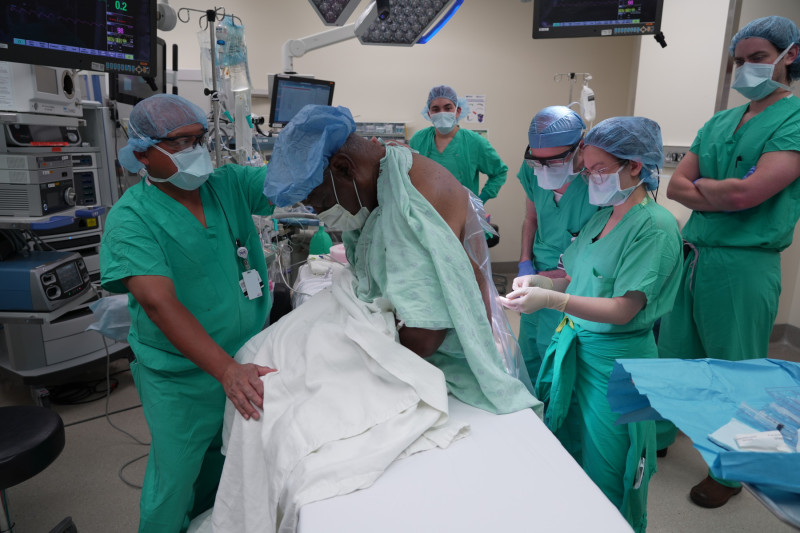
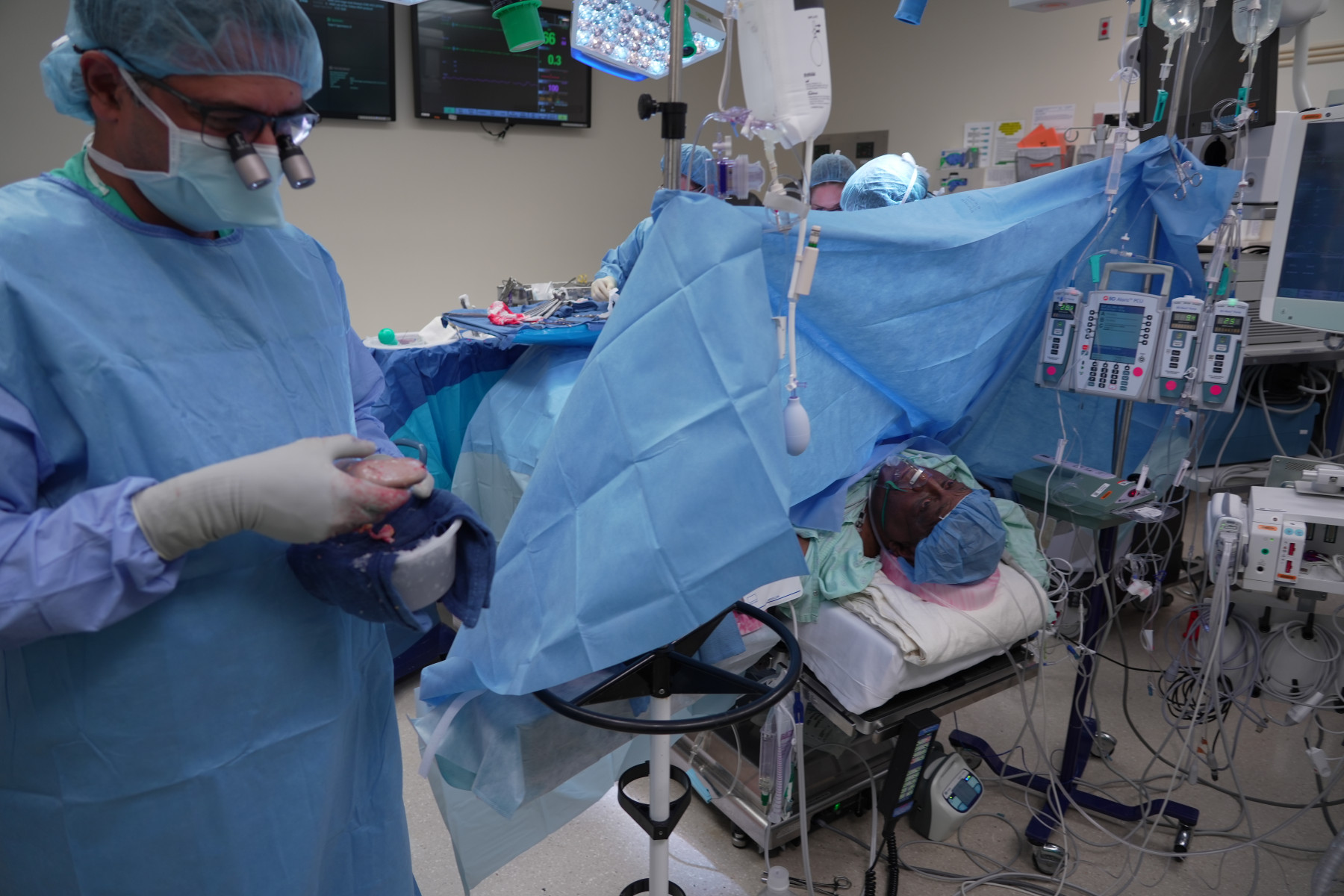
CHICAGO - Aug. 7, 2024 - Northwestern Medicine surgeons have performed an awake kidney transplant for the second time. The patient, 74-year-old Harry Stackhouse of Zion, Ill., felt no pain during the procedure and was home 36 hours after surgery. General anesthesia inherently poses a risk to anyone, but when older patients with end stage kidney failure go under general anesthesia, they tend to have more significant cognitive impairment, heart and lung issues and decreased return of their gastrointestinal tract. Stackhouse fit the criteria for what Northwestern Medicine is hoping to do as it establishes the AWAKE Kidney Program (Accelerated Surgery Without General Anesthesia in Kidney Transplantation).
“Patients like Harry are exactly who the AWAKE Kidney Program was built for,” said Satish Nadig, MD, PhD, transplant surgeon and director of the Northwestern Medicine Comprehensive Transplant Center who performed Stackhouse’s transplant. “Patients who have cardiopulmonary disease may be at higher risk for general anesthesia. There are also some patients around the country who have had complications from their intubations in the past and do not want to be intubated. An awake kidney transplant procedure could be their best option.”
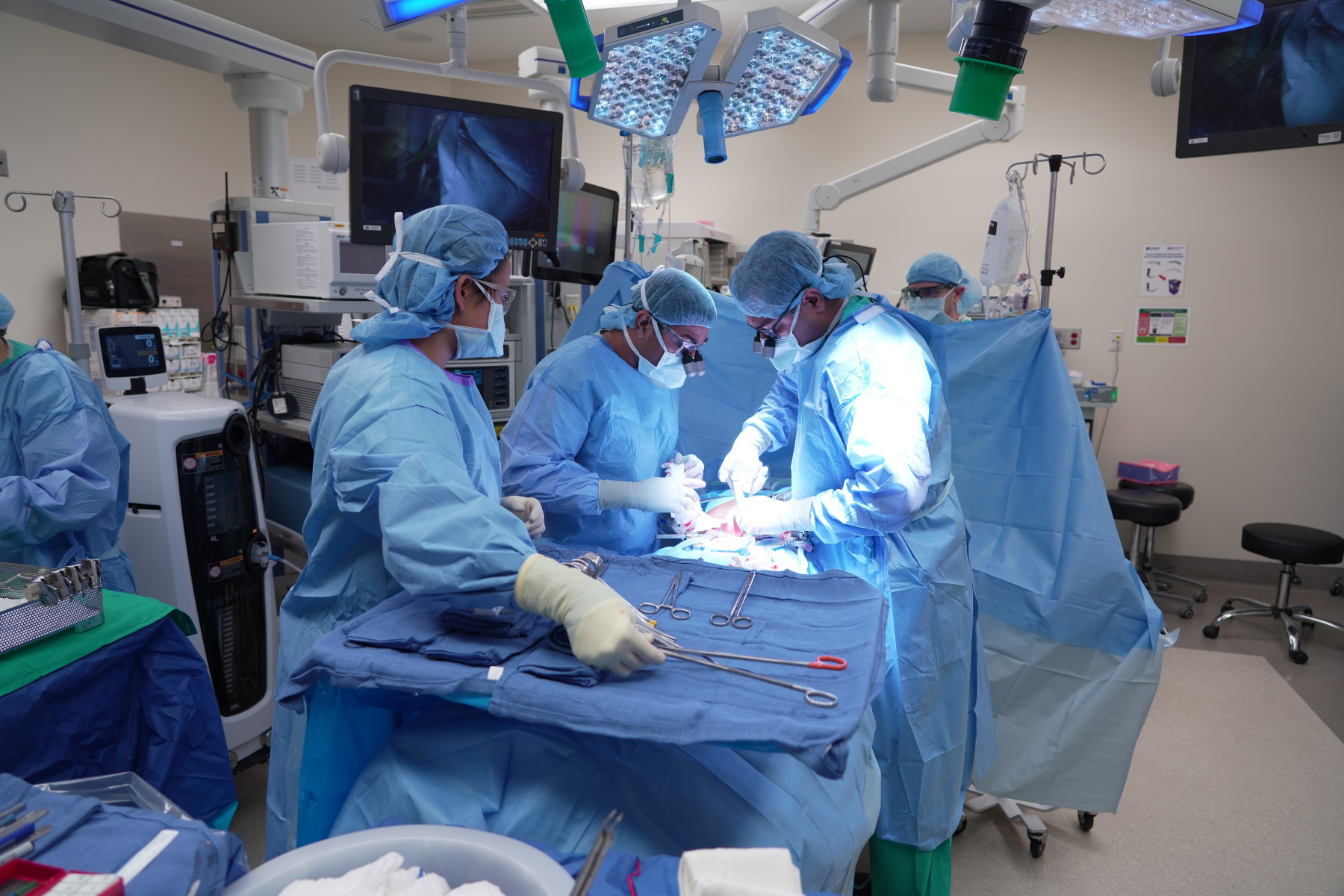
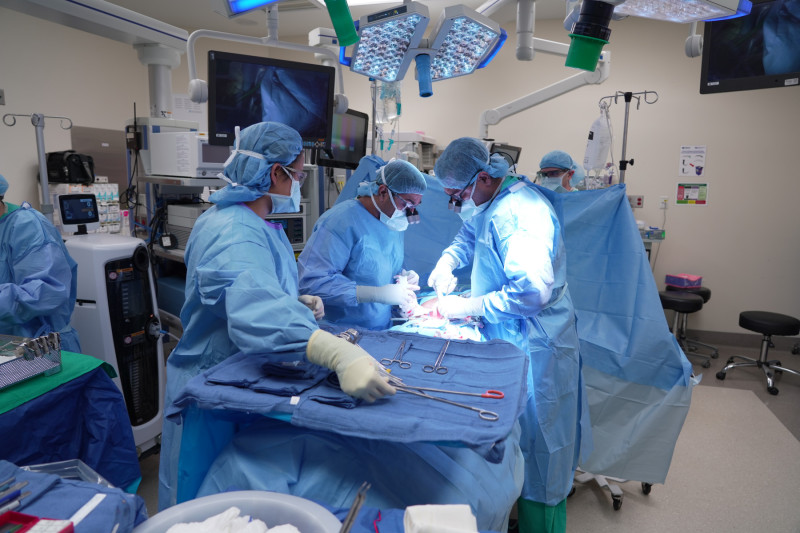
Stackhouse’s surgery was on July 15 and took a little over an hour. He could have been discharged 24 hours after surgery, but Northwestern Medicine doctors elected to keep him in the hospital a little longer due to his age and because his kidney was working so well they wanted to make sure he could stay hydrated.
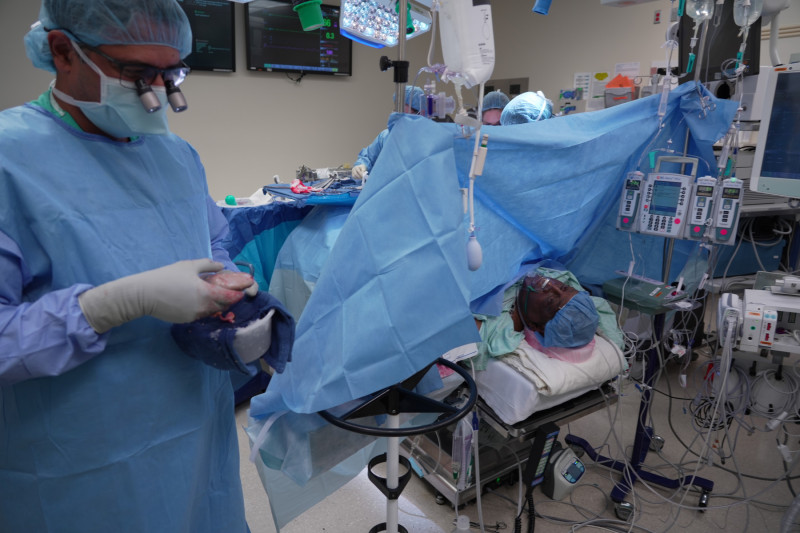
“Not one time did I feel pain during surgery – not even the spinal shot – I didn’t feel anything,” Stackhouse said. “My recovery has been very smooth. I was walking and eating solid foods the same day as my surgery, and I walked a half mile around my neighborhood the day I got home from the hospital. Currently, I walk a mile every day, take my medications and get my blood drawn to make sure everything looks good. I haven’t had any downtime with this procedure.”
Stackhouse – a father of six and grandfather to 17 – began feeling ill in December 2019 and thought it was the flu. He fought through it for about three months, but after he could hardly walk or breathe, his children told him something was wrong and took him to the emergency department at Northwestern Medicine Lake Forest Hospital.
Not only was Stackhouse diagnosed with COVID-19 in the early days of the pandemic, but one of his kidneys was failing and the other was only working at two percent. Stackhouse was immediately put on dialysis, and he remained on it for four years until the option of a kidney transplant was presented to him.
His daughter, 45-year-old Trewaunda Stackhouse of Waukegan, Ill., stepped up to donate one of her kidneys. Harry Stackhouse was content with being on dialysis and his daughter had to convince him to get a kidney transplant.
“I didn’t want a transplant because I didn’t want to intrude on any of my kids’ lives,” explained Harry Stackhouse. “I told them, ’Live your life; your dad can handle this,’ but Trewaunda insisted. I am so thankful, and I can’t say ‘thank you’ enough. I give all the praise to her and my medical team at Northwestern Medicine.”
“I wanted my dad to get a kidney transplant so he could go back to living the way he was before his renal failure and go back to work,” said Trewaunda Stackhouse. “From the beginning, when he was diagnosed with renal failure, I thought to myself that he should have a kidney transplant. I didn’t like seeing the downside effects of his dialysis three times a week. I wanted him to get back to doing the things he enjoyed without being tired.”
Not only did Harry Stackhouse need be convinced to get a kidney transplant, but his daughter convinced him to be awake during the transplant procedure after Dr. Nadig suggested the idea.
“Dr. Nadig said it would be a much better procedure for me due to my age and potential side effects from general anesthesia. I was skeptical at first, but Trewaunda assured me it would be okay. She said, ‘Dad, this is the same type of anesthesia that’s used when women have C-sections; you can do this,’” said Harry Stackhouse, who also remembers seeing his daughter’s kidney during surgery before it was transplanted into him. “Dr. Nadig showed it to me and the first thing I said was, ‘That kidney is big!’”
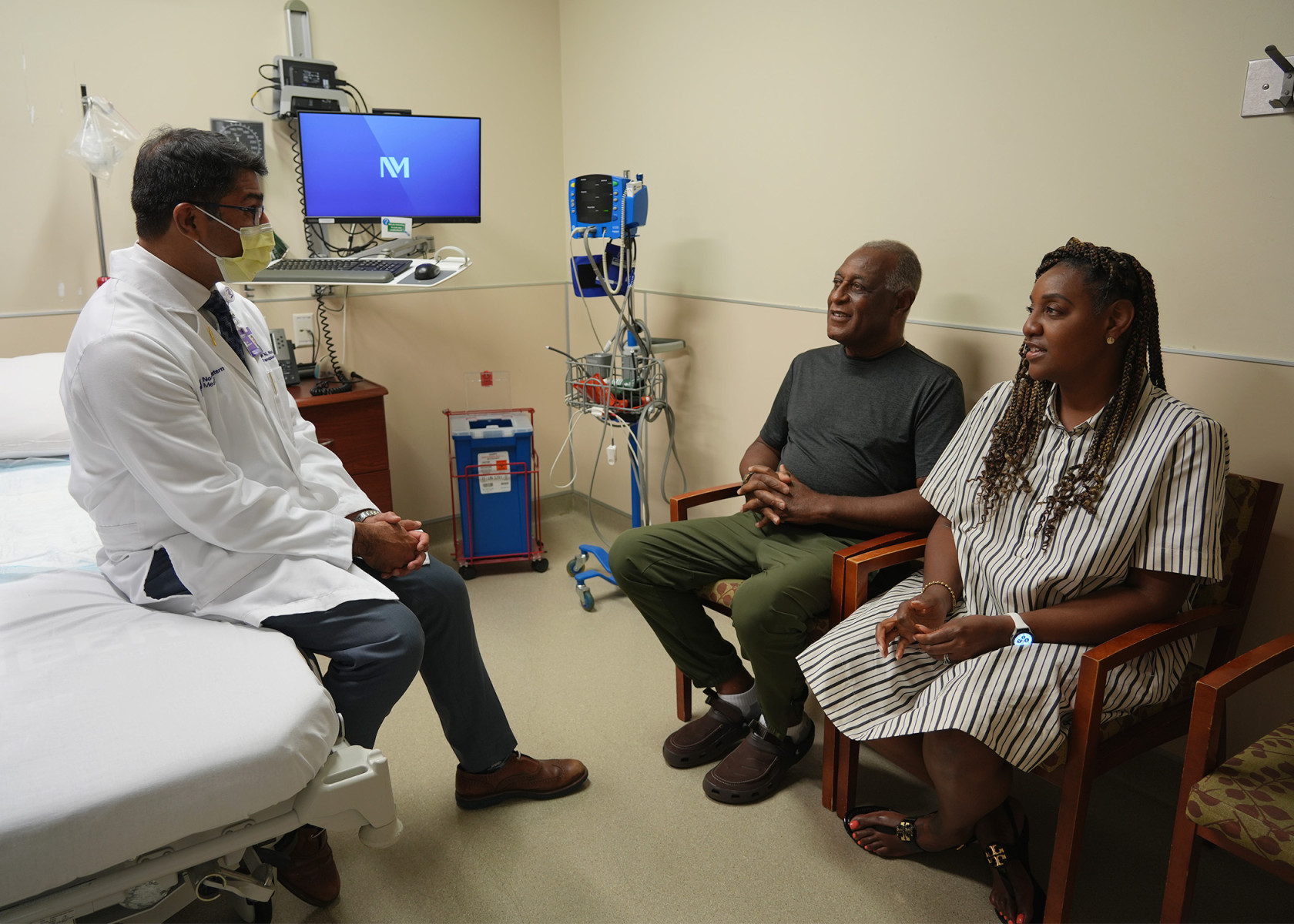
With his new kidney and new lease on life, he hopes to return to one of his favorite hobbies: fishing.
“By using a spinal anesthetic for kidney transplantation, we’re able to bypass the risks associated with general anesthesia. Additionally, older patients like Harry won’t have the recovery period associated with intubation and being on a ventilator, which improves the patient experience,” said Dr. Nadig. “Harry’s surgery took less than two hours, and he was discharged 36 hours later. The AWAKE Program opens the door for countless patients like Harry who can get home and get back to doing what they love with the people they love much quicker.”
Northwestern Medicine surgeons performed their first awake kidney transplant on May 24. The patient, 28-year-old John Nicholas of Chicago, was discharged less than 24 hours after surgery and continues to do well.
To learn more about Northwestern Medicine’s kidney transplant program, visit nm.org.