

Northwestern Medicine Kishwaukee Hospital completes 100th Robotic-Assisted Bronchoscopy
Patients can get a quicker diagnosis, start treatment sooner, and stay closer to home
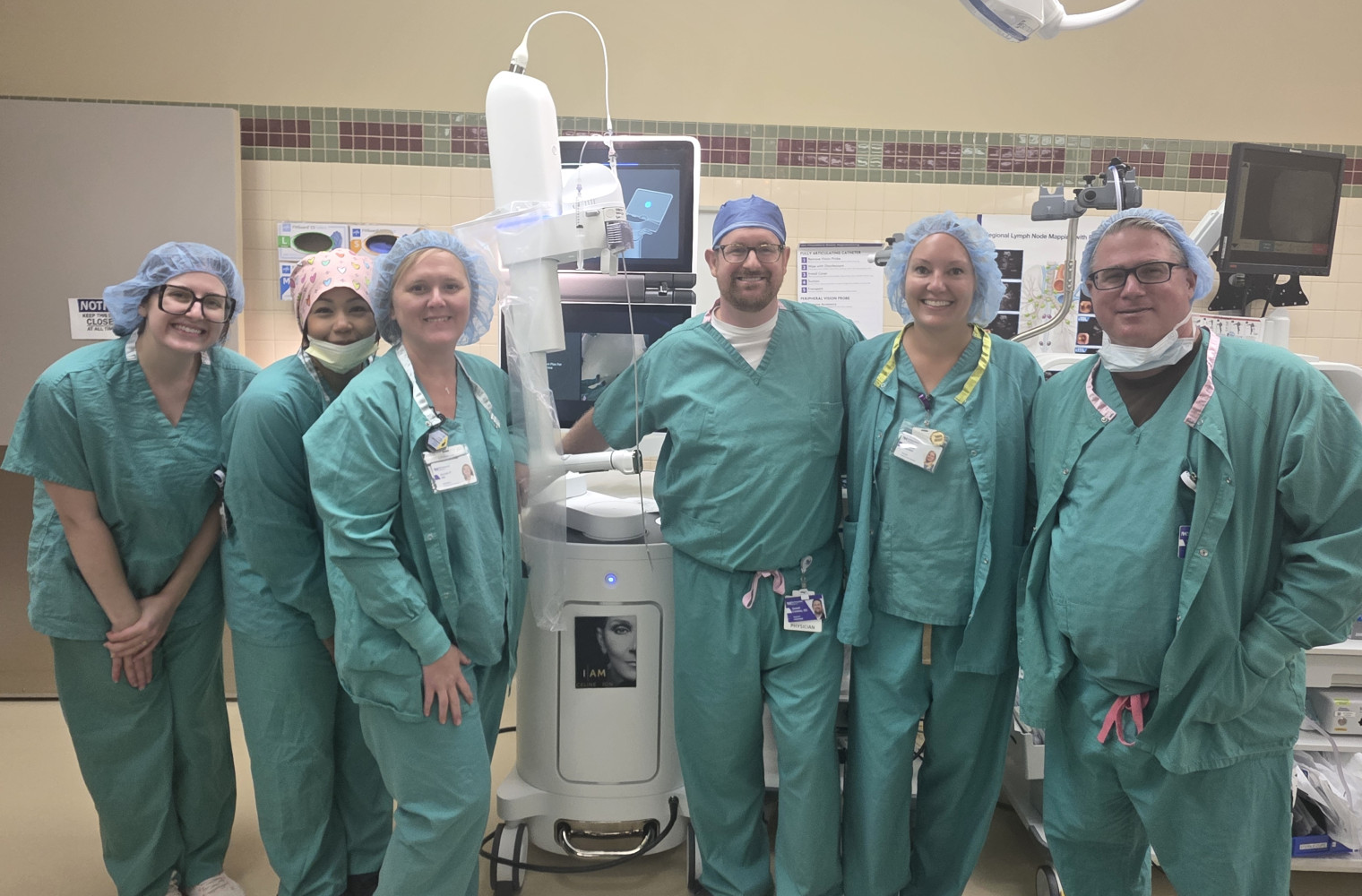
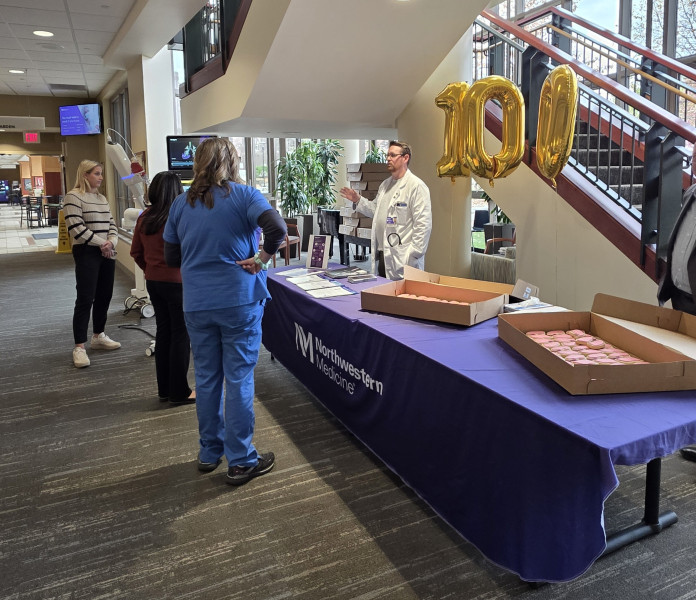
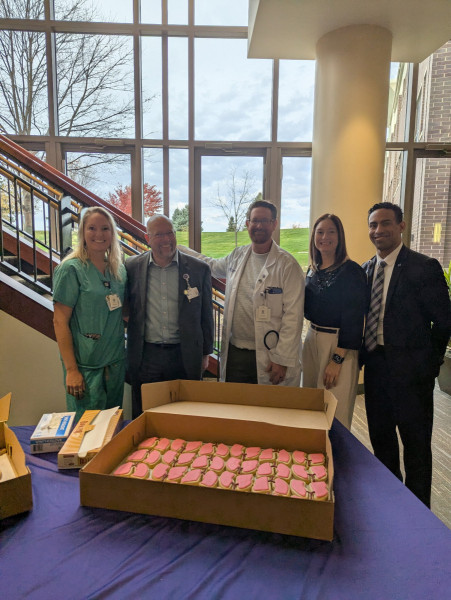
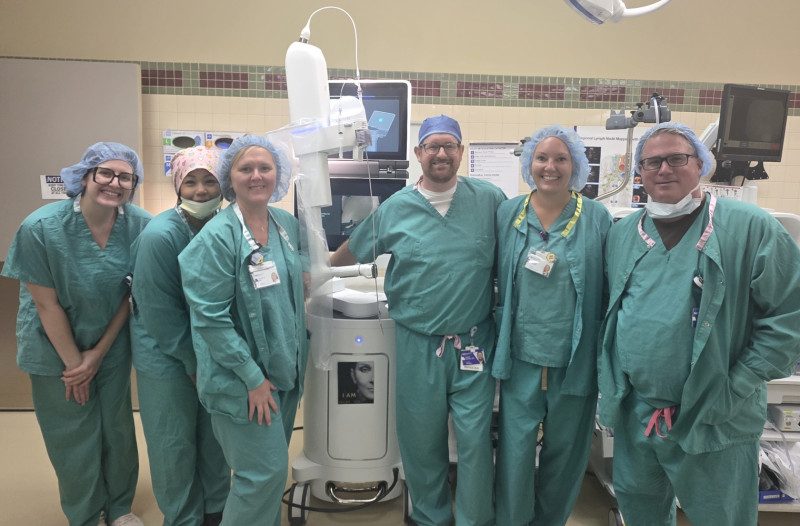
DEKALB, IL — Northwestern Medicine Kishwaukee Hospital recently celebrated a milestone – its 100th robotic-assisted bronchoscopy surgery. In the innovative procedure, a surgeon takes biopsies of the lung, and a pathologist is present in the room during the procedure. They can diagnose lung cancer in real time.
Robotic-assisted bronchoscopy is a game-changer for patients in DeKalb and the surrounding communities. The high-tech option is less invasive for patients needing a lung biopsy. Physicians can access the harder-to-reach nodules in the peripheral lung more quickly and safely. Most lung nodules, about 70 percent, are in the peripheral lung, or outer regions of the lung.
“It’s incredibly stressful for patients to wait for biopsy results. To be able to minimally acquire a tissue sample and analyze rapidly, we can not only ease some of that anxiety for patients, but we can also swiftly get them to treatment,” says Daniel Coomes, DO, an interventional pulmonologist at the Canning Thoracic Institute at Northwestern Medicine Kishwaukee Hospital.
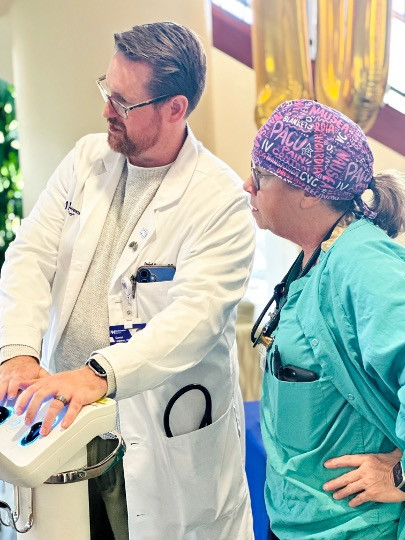
For the procedure, 3D and specialized software is used to chart out a path to the area of concern in a patient's lung. During the bronchoscopy, Coomes uses a controller to navigate a 3.5 mm catheter, which can move 180 degrees in any direction, to the target. Computer-guided navigation and a camera probe provide the physician a real-time view of the lung. When the nodule is reached, the catheter locks on. Sensors hold it in place as the lungs fill and deflate with each breath. Tissue samples are removed for biopsy. With the tools, an interventional pulmonologist can mark the nodule with a fluorescent dye. This can help a surgeon to remove as little lung tissue as possible in the future.
"Catching the cancer so early was a blessing”
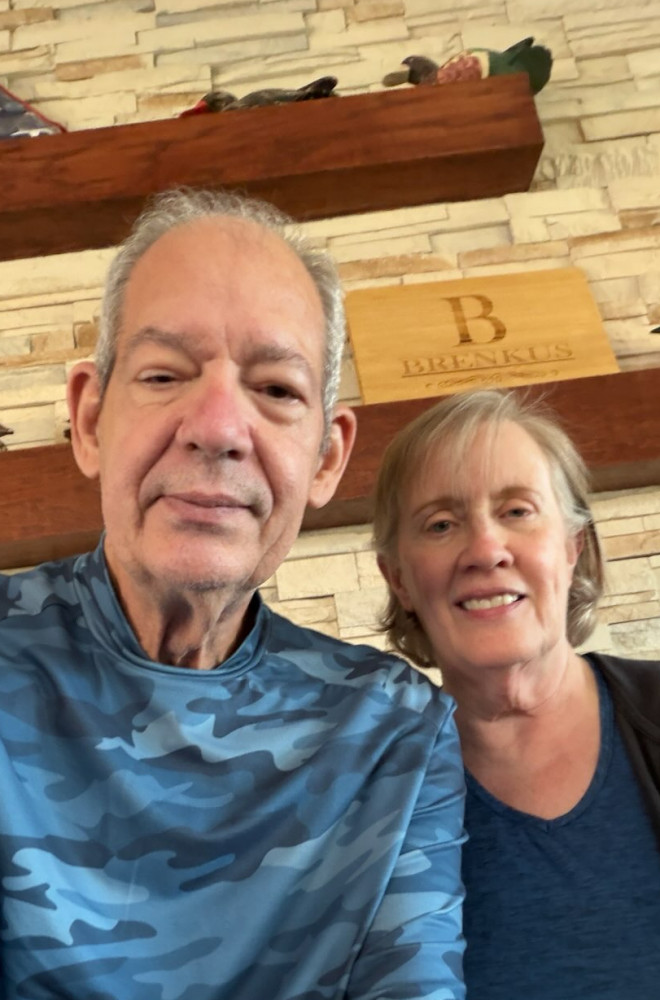
For Nick Brenkus of Gilberts, Ill., the robotic-assisted bronchoscopy was a smooth procedure that helped him get his cancer diagnosis early - making it easier to fight. For three years, Dr. Coomes had monitored a small spot shown on CT imaging of Brenkus’s lung. When it began to grow, he recommended the robotic-assisted bronchoscopy.
“Quite honestly, he doesn't really remember too much about [the procedure] because it was so easy and so painless,” Nick’s wife, Susan, recalled. “He went in that morning. Dr. Coomes did the bronchoscopy. He was there for maybe another hour in recovery in Kishwaukee. Dr. Coomes said, ‘You know, you might end up with a sore throat or a little achiness,’ but he came home and the next day was back to Nick.”
The biopsy taken during the procedure showed Brenkus had stage one adenocarcinoma, the most common subtype of lung cancer. With a family history of cancer, Nick knew that catching cancer in stage one meant the cancer is small and had not spread to other parts of the body, meaning it was more favorable to treat.
Because they caught it so early, he was able to have the cancer surgically removed by Northwestern Medicine thoracic surgeon Andrew Arndt, MD. The 76-year-old was able to avoid chemo or radiation because of it.
“Any of the follow-ups since the surgery have all been good,” Brenkus shared.
“The fact that Dr. Coomes saw this early on and continued to keep an eye on it really helped with identifying the issue soon enough that we caught this so early. That is a blessing,” Brenkus’ wife Susan said.
Expanding Access to Robotic Procedures in Dekalb
Robotic-assisted bronchoscopy is one of several robotic-assisted procedures Northwestern Medicine Kishwaukee Hospital offers. Last year, they completed a $15 million renovation of its surgery suite. Upgrades included adding a second surgical robot and expanding access to minimally invasive robotic surgeries.
“We’re dedicated to making sure our patients have access to these advanced, minimally invasive procedures close to home. This is critical to early diagnosis and treatments for our patients and ensures the highest level of care is available for our community, in our community,” said Maura O’Toole, president of Northwestern Medicine Kishwaukee Hospital.
Robotic-assisted procedures enable a gentler, more precise approach, helping patients heal faster and return to their daily routines with minimal downtime. Robotic surgical technology can also support prostate, kidney, bladder, and gynecological operations, as well as general surgery procedures like hernia repairs, bowel resections, and appendix removals.
November is Lung Cancer Awareness Month. Lung cancer is the leading cause of cancer death in the United States, about one in five cancer deaths. More people die of lung cancer than of colon, breast, and prostate cancers combined.
To learn more about robotic-assisted bronchoscopy at Northwestern Medicine, visit https://www.nm.org/conditions-and-care-areas/treatments/ion-lung-screening.
For more information on the Northwestern Medicine Canning Thoracic Institute, visit https://www.nm.org/conditions-and-care-areas/pulmonary.

Access to advanced, minimally invasive procedures is critical to early diagnosis and treatments for our patients and ensures the highest level of care is available for our community, in our community.

Contact

|
Megan McCann Program Director, Media Relations Northwestern Medicine Health Network Central DuPage Hospital, Lake Forest Hospital, Palos Hospital, Delnor Hospital, Kishwaukee Hospital, Valley West Hospital, Marianjoy Rehabilitation Hospital, McHenry Hospital, Huntley Hospital, Woodstock Hospital, Proton Center |