

Los Angeles mom of three travels to Chicago for lifesaving liver transplant after “silent” colorectal cancer spreads to her liver
Northwestern Medicine is among the only programs nationwide transplanting livers for colorectal cancer that has spread to the liver

CHICAGO – March 12, 2026 – In May 2024, 39-year-old Amy Piccioli walked into an emergency department in Los Angeles expecting treatment for dehydration after a stomach bug swept through her family. Instead, a CT scan revealed a mass in her colon and multiple lesions in her liver. When a biopsy confirmed stage 4 colorectal cancer, Piccioli was shocked. She had no symptoms at all.
“I had zero signs of colorectal cancer. No pain, no changes in bowel habits and no family history,” said Piccioli, now 41. “When a doctor tells you it’s stage 4, you think, ‘My life is over.’ Learning that a transplant could be an option for me changed everything.”
As Piccioli began to process her diagnosis, she learned that her experience reflects a troubling trend: colorectal cancer is increasingly affecting adults under 50, often at more advanced stages and with few or no warning signs. For patients like Piccioli, whose cancer had spread to the liver alone, advances in transplant oncology are opening options that didn’t exist a decade ago.
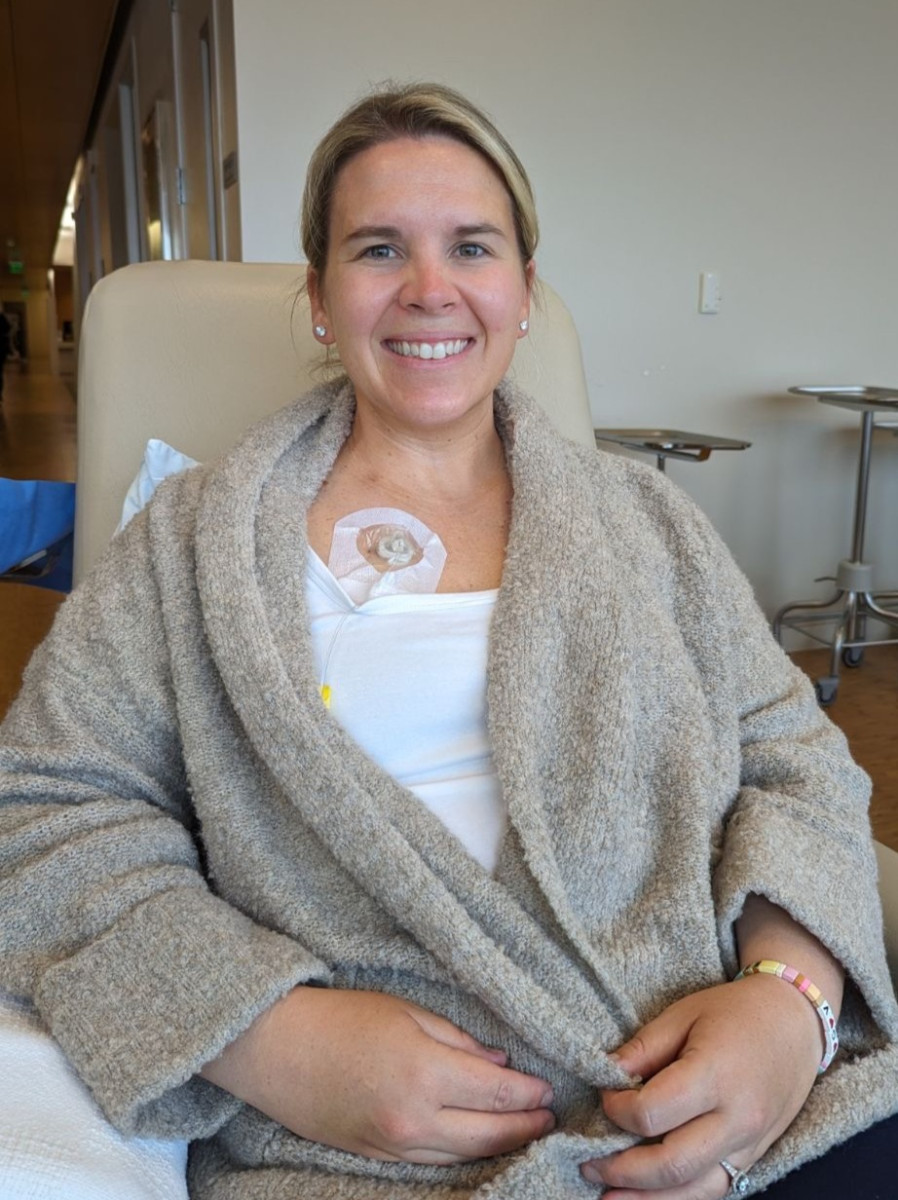
“Because transplant for colorectal liver metastases is still so new and offered at only a handful of centers, it’s not yet on the radar for every clinician and patient,” said Satish Nadig, MD, PhD, transplant surgeon and director of the Northwestern Medicine Comprehensive Transplant Center. “Amy was fortunate because her team in California recognized that possibility and sent her our way. Patients who meet the criteria should hear about transplant early enough in their journey to benefit from it.”
At the time of her diagnosis, Piccioli was a busy mom raising three young children in the South Bay region of Los Angeles. She worked as a CPA and spent weekends biking to the beach and attending Dodgers games with her family. Her medical team in California started chemotherapy, shrinking her disease to the point where liver transplantation could be considered and encouraged Piccioli to explore programs in the U.S. that were offering transplantation for colorectal liver metastases.
After learning about Northwestern Medicine’s innovative oncologic approach to liver and lung transplantation, Piccioli traveled to Chicago in September 2025, where a multidisciplinary team at Northwestern Memorial Hospital evaluated her and determined she was a strong candidate for a living‑donor liver transplant.
“Amy had disease confined to the liver and had responded very well to treatment,” said Zachary Dietch, MD, transplant surgeon at Northwestern Medicine. “For patients with unresectable colorectal liver metastases, chemotherapy alone historically results in a 10% five‑year survival. But in carefully selected patients who undergo liver transplantation, five‑year survival can reach 60% to 80%, and some patients achieve long‑term cure.”

A donor steps forward
When Piccioli shared the living‑donor screening link with friends and family, an unexpected match emerged: Lauren Prior, the daughter of longtime family friends who live in Chicago and have known Piccioli since she was a toddler.
“It felt like fate,” Piccioli said. “Lauren and her family had already told us we could stay with them in Chicago while I recover from the surgery. And then she turned out to be my perfect match. At that point, I had so much faith in my surgical team that I was more scared of a Chicago winter than a liver transplant.”
On Dec. 17, 2025, surgeons at Northwestern Medicine performed Piccioli’s transplant, removing the last of her cancer. Three months later, both Piccioli and Prior are recovering well. A blood test that detects residual cancer cells came back negative, confirming she has no evidence of disease.
Coordinating cancer‑related liver transplants
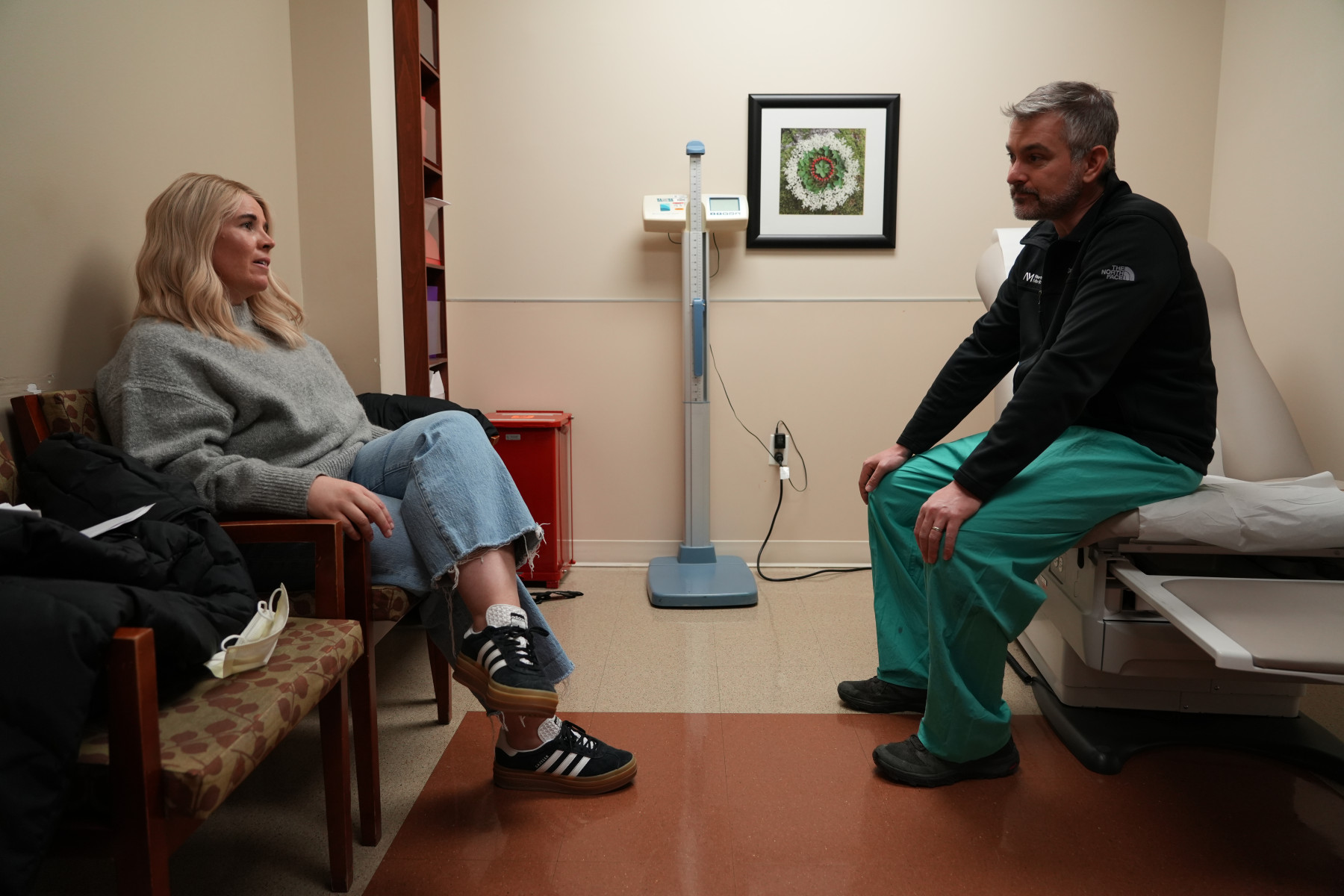
Successful transplantation for metastatic colorectal cancer requires meticulous coordination between oncology, hepatology and transplant surgery, said Andres Duarte‑Rojo, MD, section chief of hepatology and director of liver transplant at the Northwestern Medicine Comprehensive Transplant Center.
“We only enroll patients in whom we believe we can completely eradicate the cancer,” said Dr. Duarte‑Rojo. “That means patients with disease confined to the liver, and no invasion of nearby structures. The timing of chemotherapy, imaging, liver‑directed therapy and transplant must be planned precisely. That orchestration is the strength of our program.”
Unlike standard liver transplants, patients transplanted for colorectal cancer undergo more frequent and intensive imaging, including CT or MRI scans of the chest, abdomen and pelvis every three months to detect recurrence as early as possible.
Healing far from home
Piccioli will remain in Chicago through the end of March for close monitoring as she continues to recover from her transplant. She said she felt compelled to share her story during Colorectal Cancer Awareness Month, especially as new data shows colorectal cancer has become the leading cause of cancer-related deaths in people under 50.
“I’m more committed to the cause than anything,” she said. “If your cancer has spread to your liver, ask your doctor about a transplant. It might be an option you didn’t know existed. That information could save someone’s life. I can’t express how grateful I am for my donor and the Northwestern Medicine transplant team for saving mine.”
Advancing the field of transplant oncology
Northwestern Medicine is among a small number of health systems in the United States pioneering transplantation for select patients with metastatic cancers of the colon or lung. In 2025, the Northwestern Medicine Comprehensive Transplant Center launched a clinical program called CLEAR to increase liver transplant opportunities for patients with colorectal cancer. The center now evaluates patients from across the country and has received international inquiries.
“Liver transplantation for colorectal cancer is still in its infancy, but the impact is undeniable,” said Dr. Nadig. “Our goal is to expand awareness so patients and physicians know this option exists, and to continue advancing transplant innovation so we can offer hope in situations where historically only hospice was offered.”
For more information about Northwestern Medicine’s transplant programs, visit nm.org.