

Father of four travels from Orlando to Chicago for rare second liver transplant following battle with lung cancer
Northwestern Medicine is one of the few known health systems in the United States offering transplants to select patients with cancers of the lung or colon
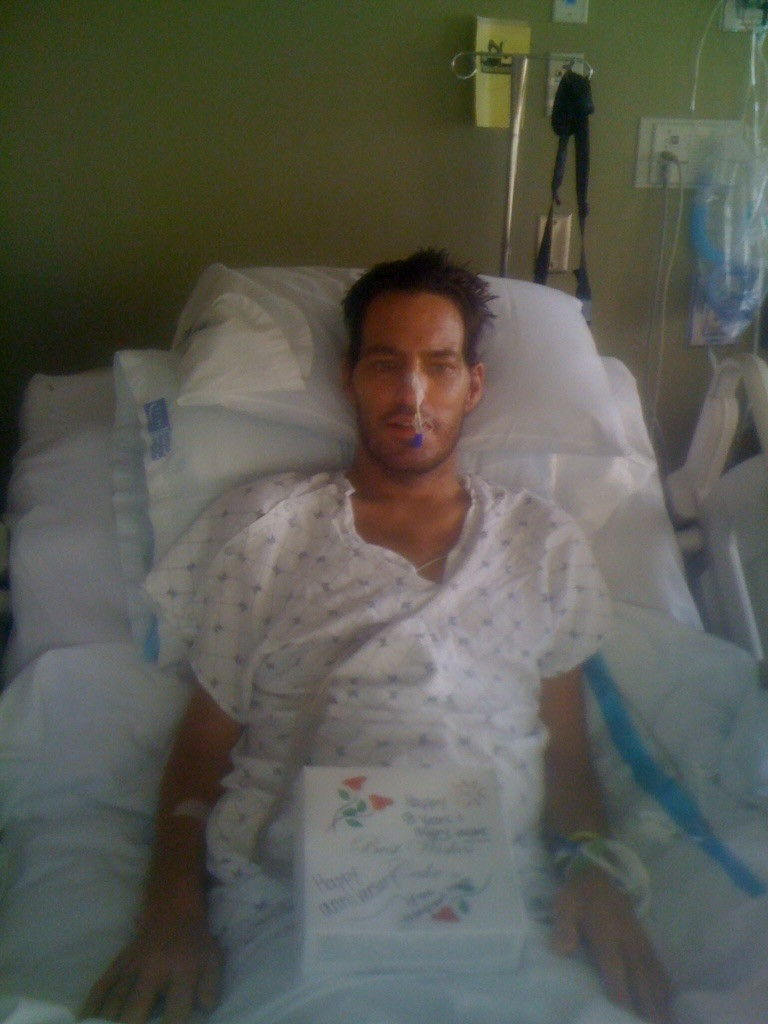
CHICAGO – June 15, 2025 – Fifteen years ago, Andrew Wagner received a life-saving liver transplant. A relatively common autoimmune disease known as primary sclerosing cholangitis (PSC) had damaged the bile ducts in his liver, causing it to fail.
After six weeks in a medically induced coma, Wagner received his new liver at a Florida hospital in October 2010. Despite facing major blood loss, post-surgical complications and multiple follow-up surgeries, he went on to work as a recruitment manager at a local blood bank in Orlando, where he shared his personal story of how organ and blood donation had saved his life. However, in 2022, a routine abdominal and chest CT scan revealed new cause for concern: stage 1 lung cancer.
“I was completely shocked. I had no symptoms at all and this was found incidentally,” said Wagner, a 55-year-old non-smoker from Winter Garden, Florida. “Little did I know that even with a positive outcome, this cancer diagnosis was going to lead to one of the biggest roadblocks of my life.”
A year after surgeons in Florida removed his cancerous lung nodule and declared him cancer-free, Wagner began experiencing a build-up of fluid around his lungs. To his surprise, the symptom wasn’t his cancer returning – his transplanted liver was starting to fail.
“When you get cancer after a transplant, you’re really between a rock and a hard place,” said Satish Nadig, MD, PhD, transplant surgeon and director of the Northwestern Medicine Comprehensive Transplant Center. “When Andrew was diagnosed with lung cancer in Florida, some of his anti-rejection medications likely had to be reduced to give his immune system a chance to fight the disease, which may have contributed to rejection of his transplanted liver.”
The search for a second opinion
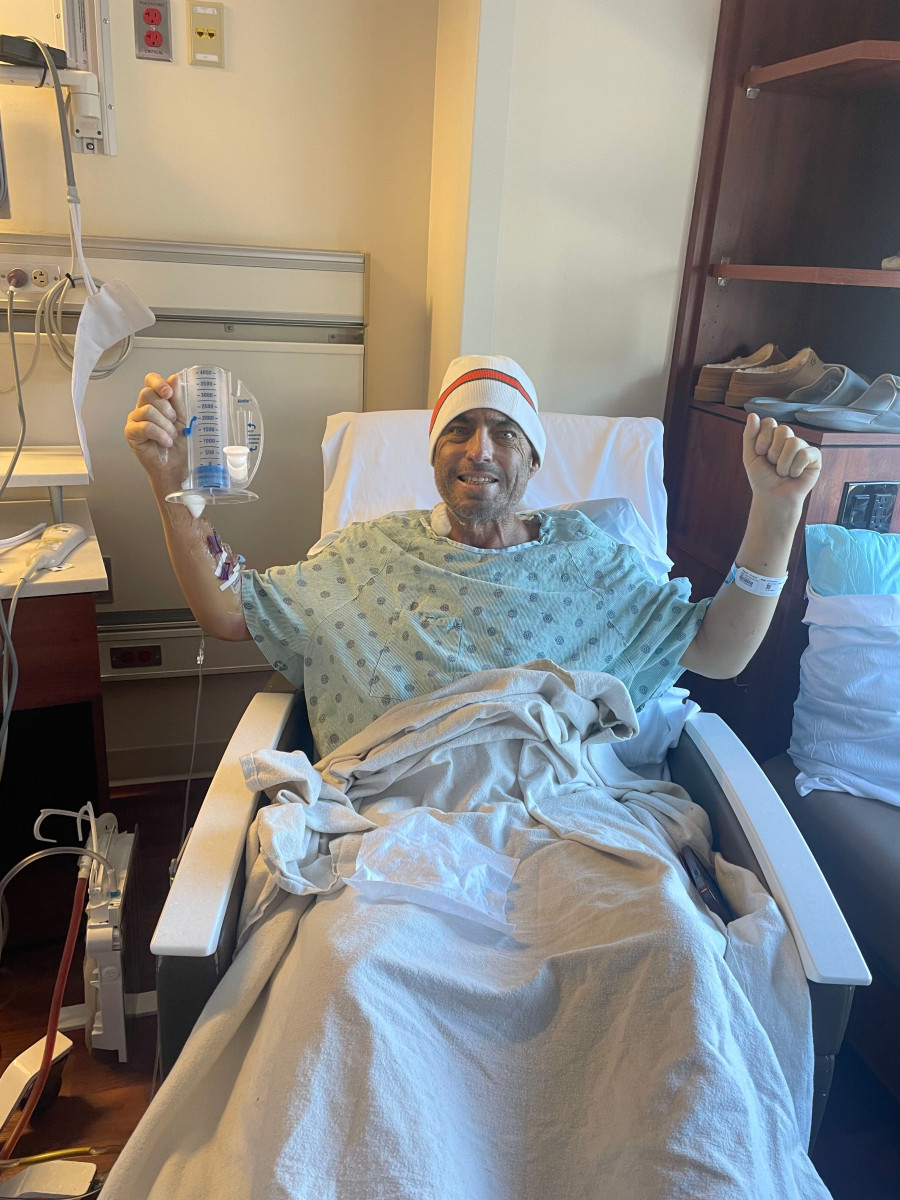
As Wagner’s condition worsened, his wife, Nicole Wagner, sprang into action. In the spring of 2024, she reached out to transplant centers across the country hoping that someone would agree to a second transplant. However, because Wagner had not been cancer-free for three to five years, they were told repeatedly that a retransplant wasn’t an option.
While searching for answers online, Wagner’s wife came across the story of Gary Gibbon, MD – a California physician who traveled to Northwestern Medicine to receive the first double-lung and liver transplant for advanced lung cancer in the U.S.
Since Dr. Gibbon had been transplanted with active lung cancer, the Wagners figured the transplant team at Northwestern Medicine might be willing to take on Wagner’s case. In October 2024, the couple traveled to Chicago to get Wagner evaluated for a second liver transplant at Northwestern Memorial Hospital. There, they received the ‘yes’ they had been searching for.
“Andrew was really on the brink when he first got to Chicago. He likely had months to live,” said Northwestern Medicine hepatologist Andres Duarte-Rojo, MD. “After presenting his case to our multidisciplinary selection committee, we determined that even with immunosuppression, the risk of his lung cancer relapsing was very low. Though we knew the surgery would be difficult, as retransplants tend to be, we were excited to offer him this critical chance for survival.”
On Dec. 16, 2024, surgeons at Northwestern Medicine began the complex process of retransplanting Wagner’s liver. Previous surgeries left him with a significant amount of scar tissue, making his old liver difficult to remove. To minimize blood loss during the extraction, surgeons placed Wagner on bypass to ensure he’d have adequate blood flow to his heart. While surgeons removed his old liver, his new liver was kept functioning outside the body in a device called “liver in a box,” which pumps warm, oxygenated blood through the organ to keep it healthy.
“Having access to this wide range of techniques allowed us to navigate Andrew’s transplant effectively,” said Northwestern Medicine transplant surgeon Zachary Dietch, MD. “It was an interesting blend of old and new – traditional methods like bypass used alongside the latest advancements in transplant such as ‘liver in a box.’”
A father heads home
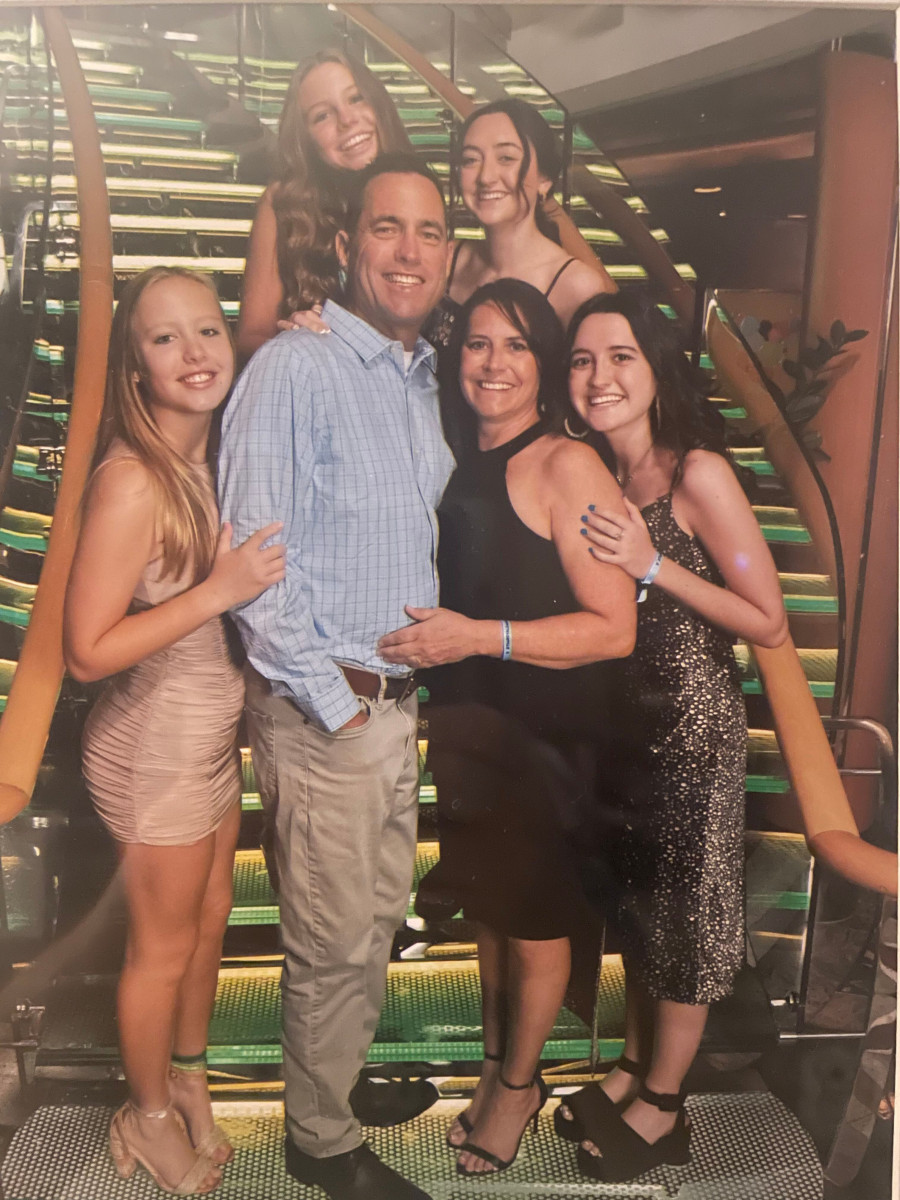
Five months after surgery, Wagner’s new liver is functioning well and he remains cancer-free. Since returning home to Winter Garden, he has been focused on staying active with walking, weightlifting, swimming and biking around his neighborhood. He is looking forward to spending Father’s Day with his blended family including his wife and two biological daughters, Estella Wagner (16) and Ava Wagner (19), two step-daughters, Riley Swartz (20) and Taylor Castillo (23) and the family’s newest addition, granddaughter Isla Castillo, who was born in April 2025.
“This particular Father’s Day will be so incredibly joyous,” said Wagner. “Receiving the greatest gift of life from the most generous organ donor has given me the opportunity to witness all the future milestones in our daughters’ and granddaughter’s lives. Thanks to my donor and my incredible transplant team at Northwestern Medicine, I still get to be a dad and grandfather.”
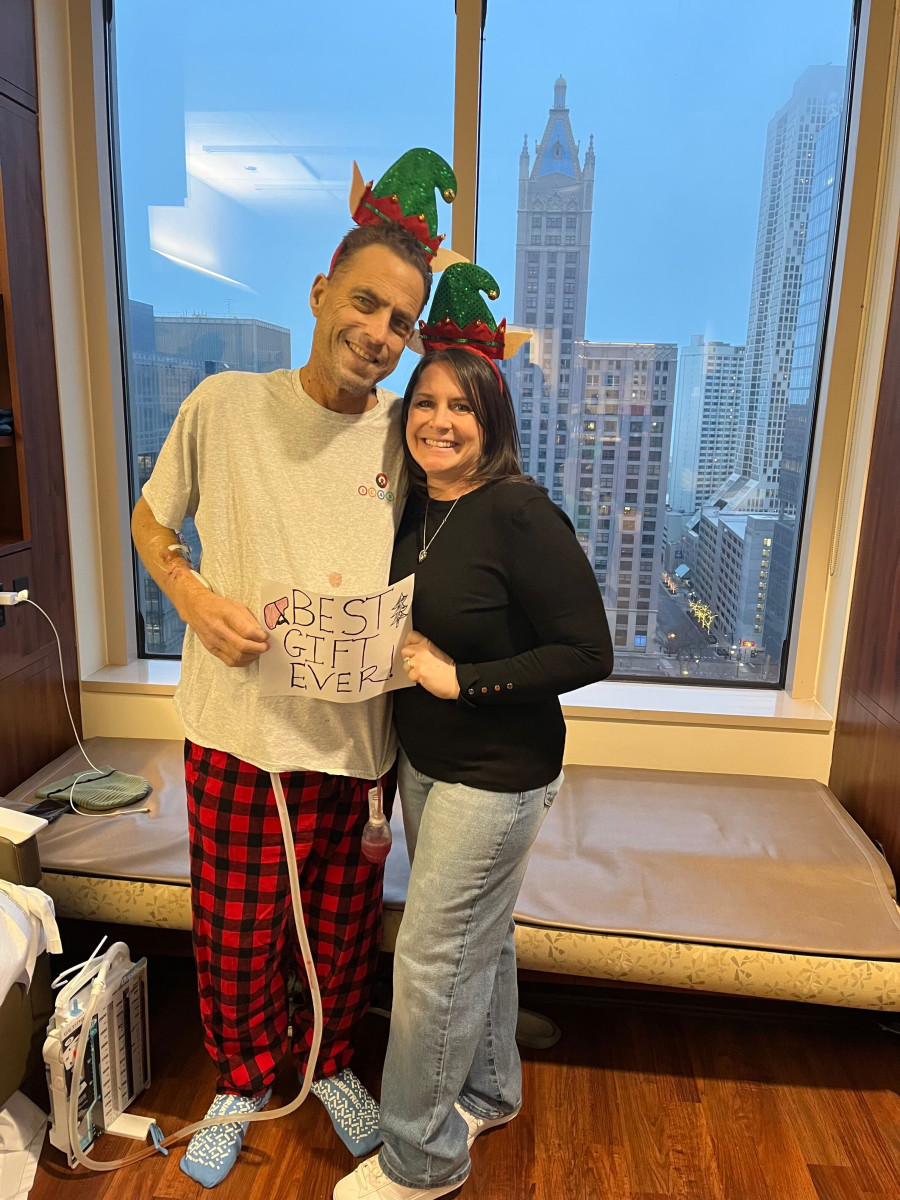
“Andrew not only connected with me as a daddy, but as a daughter-daddy,” said Dr. Nadig. “A few days after his transplant, I was talking to Nicole about a trip to Disney World my wife and I had planned for our daughter’s eighth birthday. Living close to the theme park, the Wagners were able to gift me with ‘Mickey ears’ for us to surprise her with. It’s families like that who remind you why you got into medicine in the first place, and why we are willing to take on the most complicated cases at Northwestern Medicine.”
Advancements in transplant oncology
Northwestern Medicine is one of the few known health systems in the country focused on redefining the criteria for transplant eligibility, especially for patients with lung or colorectal cancer. To date, the Northwestern Medicine Canning Thoracic Institute has performed more than 50 lung transplants for patients with advanced lung cancers through a first-of-it’s-kind clinical program called DREAM (Double Lung Transplant Registry Aimed for Lung-Limited Malignancies).
In March 2025, the Northwestern Medicine Comprehensive Transplant Center launched a clinical program called CLEAR (Colorectal Metastasis to Liver Extraction with Auxiliary Transplant and Delayed Resection) to expand liver transplant access for patients with stage 4 colorectal cancer.
“It’s a very exciting time for the field of transplantation,” said Dr. Nadig. “What we’ve learned in the past is not necessarily what we’re taking with us into the future. I think it’s time to re-examine what we think we know about the indications for transplant, and become more inclusive of those who have recently faced or who are facing cancer. Northwestern Medicine should not be a stop along a patient’s journey – it should the destination.”
For more information about Northwestern Medicine’s transplant programs, visit nm.org.