

Cousins with a family history of colorectal cancer share the importance of screenings and bring a sense of humor to ease the potential stress getting tested can bring
Linda Bugna and Bonnie Fisher of Genoa join together to encourage others to get their colonoscopies, the gold standard for screening
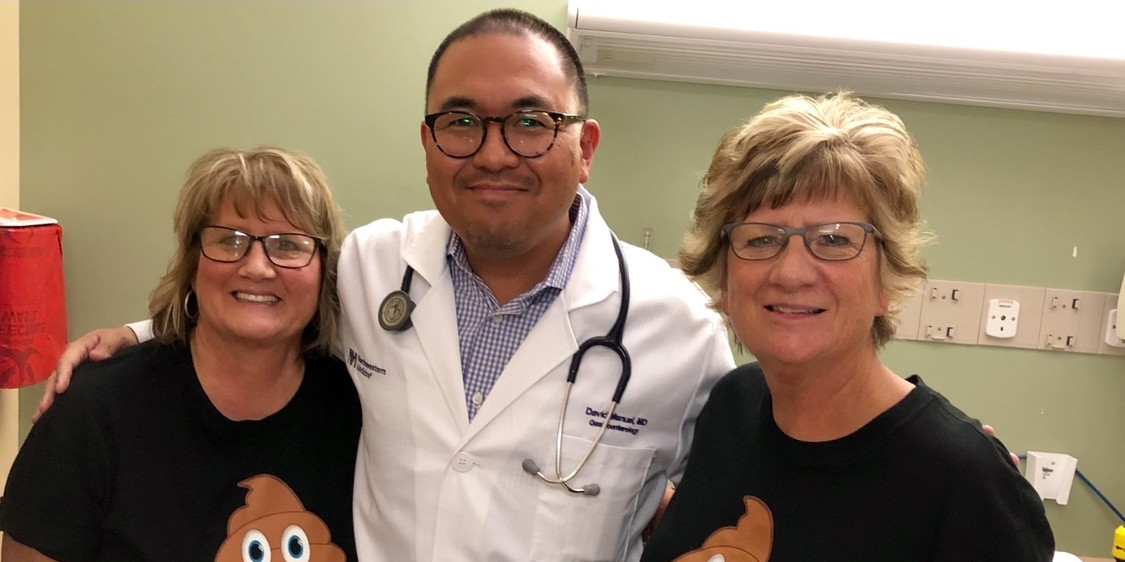
DEKALB, Ill. – March 13, 2025 – With a family history of colorectal cancer, cousins Linda Bugna, 66, and Bonnie Fisher, 65, both from Genoa, Ill., knew they needed to get screened.
“I think we were both a little nervous. We were 57 and 58 at the time and that’s past due,” said Fisher. “We said, ‘Let's just do it. Let's do it together. Let’s see if they'll do it back-to-back. And we say, ‘Pun intended — back-to-back.”
That same sense of humor came into play as Fisher and Bugna prepared for their first colonoscopies, scheduled at Northwestern Medicine Kishwaukee Hospital in DeKalb in 2016.
While out shopping together, they found humorous t-shirts with a familiar stool-related emoji and they had a nearby t-shirt shop, Wakoh Wear in Genoa, add “Cousin Colonoscopies” to the front.
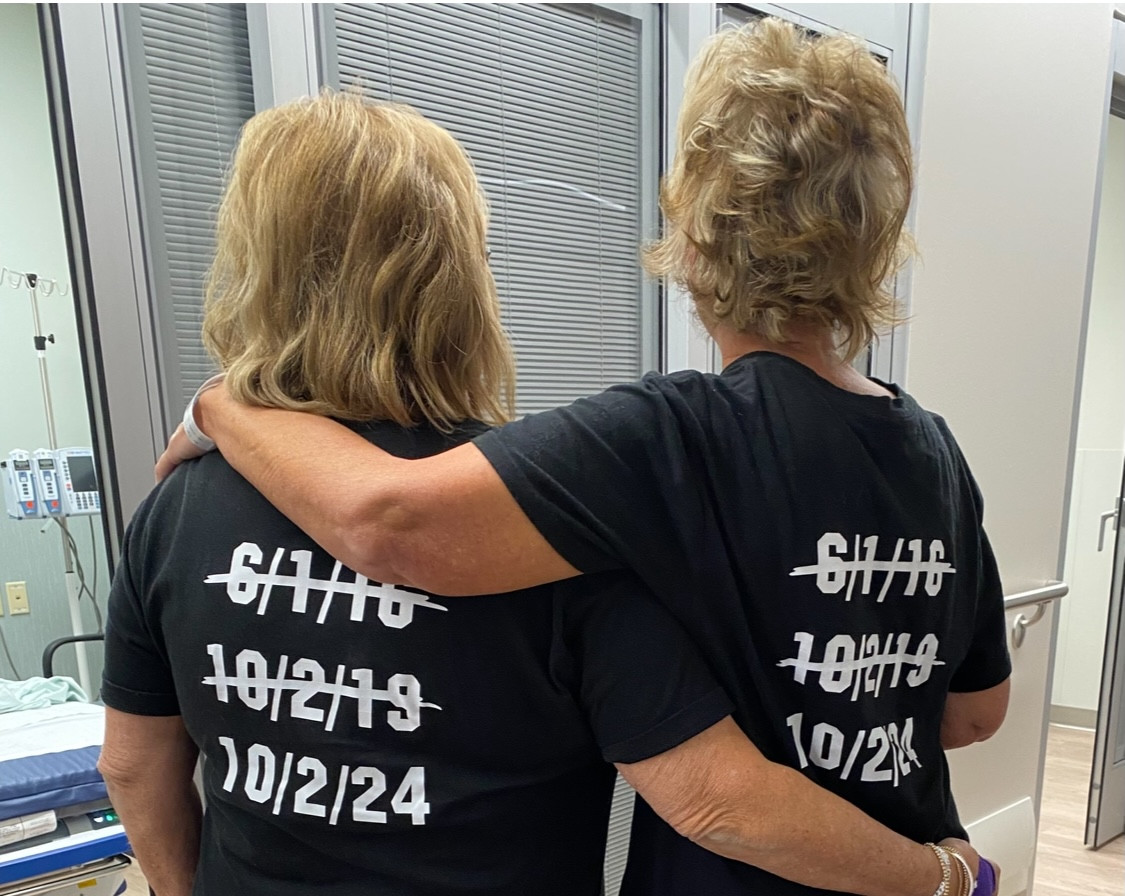
“Every year that we get our colonoscopies, our friend puts the date on the back and then scratches that date off, until we come in again with the next date. He takes care of us,” Bugna said.
The cousins, who grew up near one another and maintained a close relationship as they aged, have undergone colonoscopies on the same day three times – in 2016, 2019 and most recently, in October 2024.

Making the best of the colonoscopy preparation
In addition to wearing the t-shirts to each colonoscopy, the cousins also drink their required “prep” out of wine glasses. While they complete the prep in their respective homes, the cousins text and Facetime, supporting one another throughout the experience.
“It went down a lot easier imagining it was wine,” joked Bugna.
Colonoscopy preparation often involves drinking a liquid solution the day before. The solution contains electrolytes and laxatives used to clear out the debris and stool from the colon.
David Manuel, MD, a gastroenterologist at Kishwaukee Hospital says the prep is the part of the colonoscopy procedure that patients dread the most.
“We've come a long way with our bowel preparations. They're not as unpleasant as they used to be, and they're the most important part of the test, because the quality of the prep impacts the quality of the exam,” Manuel said.
“One of the misconceptions about colonoscopies is that they are painful. Here at Kishwaukee Hospital, our patients are sedated for their procedure and there's no pain involved,” Manuel said.
Colonoscopy screening guidelines
The guidelines for colorectal cancer state that adults with average-risk should start screening colonoscopies at the age of 45.
“In patients who have a family history of either colorectal cancer or colon polyps, screening may need to start earlier,” Dr. Manuel said, urging those with a family history to speak with their physician to determine a personalized screening schedule.
“We have an aunt who passed away from colon cancer. Bonnie’s dad had colon cancer. I also have a sister-in-law that had colon cancer,” Bugna said.
While Bugna and Fisher waited longer than advised to get their first colonoscopies, Dr. Manuel applauds their diligence and the approach they’ve taken to screenings since then.
“They advocate for each other. They both want to make sure they stay healthy and prevent problems in their health further down the road, and they're holding each other accountable for that,” Dr. Manuel said.
Comprehensive GI Care at Northwestern Medicine Kishwaukee Hospital
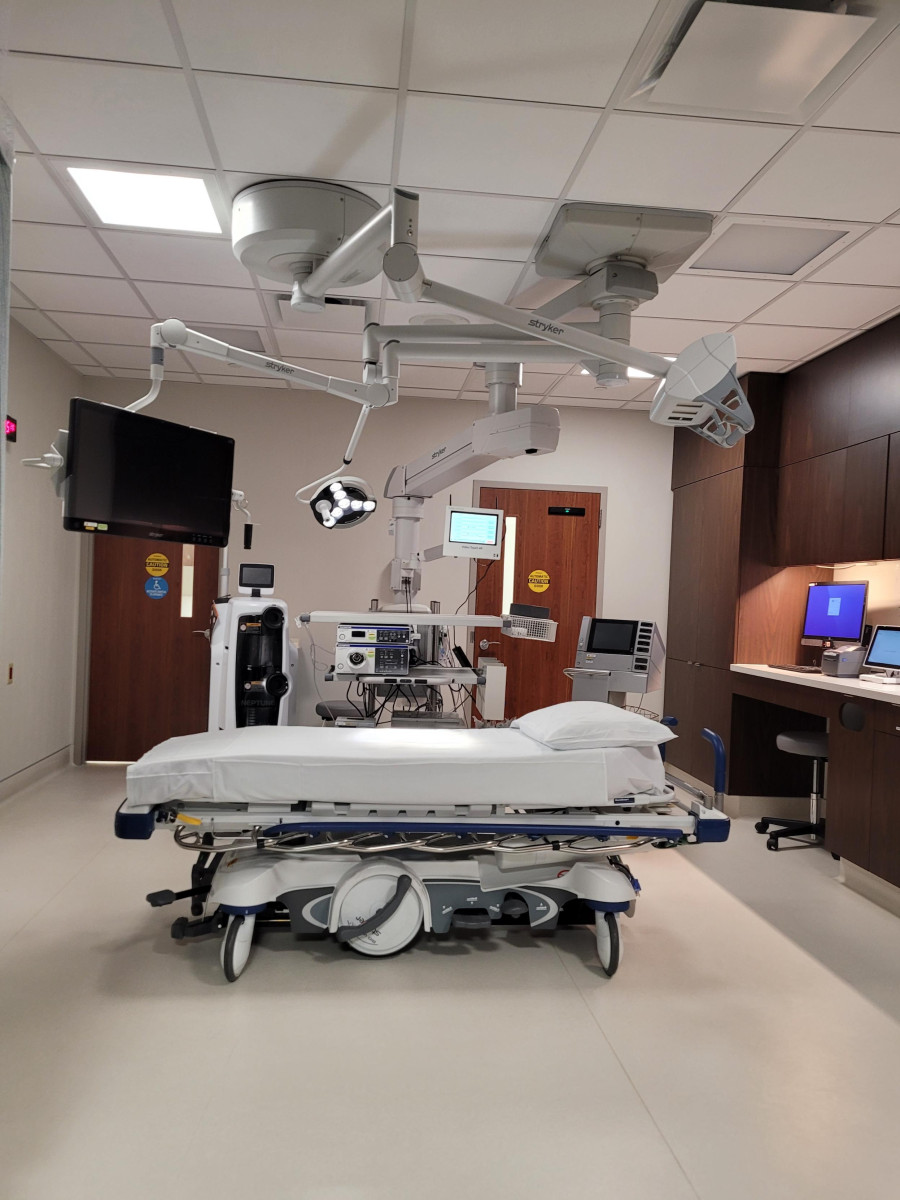
As part of the Northwestern Medicine network, Kishwaukee Hospital offers patients access to world-class care and leading-edge clinical trials. Northwestern Medicine Kishwaukee Hospital recently completed a $15 million renovation of its 19,000-square-foot surgical area, the first remodel since the hospital building opened in 2007.
The surgical area now includes two endoscopy suites, which both utilize the FDA-approved Medtronic GI Genius™, an artificial intelligence-aided detection system. A study conducted by gastroenterologists at Northwestern Memorial Hospital found use of the GI Genius™ system results in the removal of more adenomas, the most common type of colorectal polyp. Adenomas have the potential to develop into colon cancer over time.
Northwestern Medicine Kishwaukee Hospital offers a robust interventional gastroenterology program, with four full-time physicians on staff. In addition to the state-of-the-art surgical suites, patients undergoing colonoscopies will also experience recently renovated waiting rooms and pre and post-operative areas. For more information about Northwestern Medicine Kishwaukee Hospital, visit nm.org.
Contact

|
Lauren Petty Manager, Media Relations Northwestern Medicine Health Network Central DuPage Hospital, Lake Forest Hospital, Palos Hospital, Delnor Hospital, Kishwaukee Hospital, Valley West Hospital, Marianjoy Rehabilitation Hospital, McHenry Hospital, Huntley Hospital, Woodstock Hospital, Proton Center |